
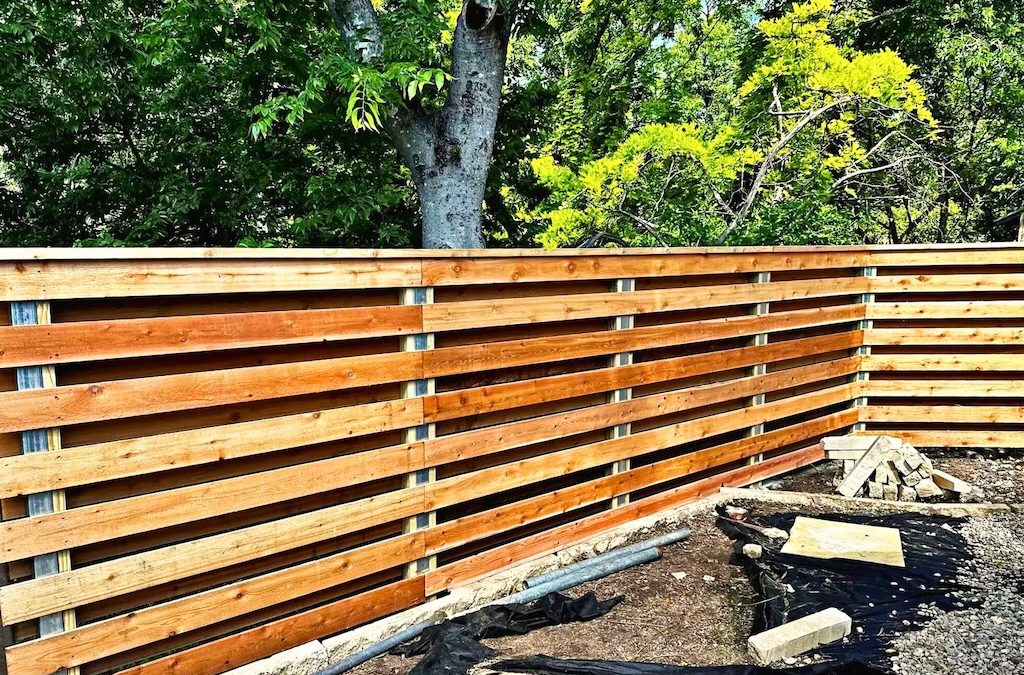
Why fence line disputes happen
Almost every boundary dispute traces back to the same root: the two neighbors don’t actually agree on where the property line is. One assumes the old fence marks it. The other thinks the line runs a foot the other way. Neither has checked, so both are guessing, and that’s where the friction starts.
It usually surfaces when someone builds. A new fence goes up, and suddenly a neighbor feels it’s crossed onto their land. Without a clear, agreed line, it’s one person’s word against the other’s. The good news is that a dispute built on a guess can almost always be solved by replacing the guess with a fact.
The property line is the whole issue
Here’s the thing to hold onto: a fence line dispute is really a property line dispute. The fence is just where the disagreement shows up. Solve the question of where the boundary truly falls, and the fence part usually sorts itself out. So the goal isn’t to win an argument, it’s to find the actual line.
That reframe helps keep things calm. It’s not you against your neighbor, it’s both of you against a shared unknown. Once you treat it as a fact to look up rather than a fight to win, the whole thing gets a lot less tense, and a solution comes into view fast.
A survey settles most of it
The single most useful step in any fence line dispute is a property survey. A land surveyor measures the lot and marks the real, legal boundary, so there’s no more guessing for either side. It’s the official answer everyone’s been missing, and it takes the argument out of the equation.
A surprising number of disputes end the moment the survey is done, because now both neighbors can see exactly where the line falls. If your fence, or your neighbor’s, turns out to be on the wrong side, the survey shows it plainly. Facts cool tempers in a way that back-and-forth opinions never do.
When a fence has crossed the line
Sometimes the survey confirms a fence has actually crossed onto the wrong side, which is called an encroachment. If a neighbor’s fence sits on your land, you have the right to ask for it to be corrected. If yours crossed onto theirs, the fair move is to fix it. Either way, the survey tells you which it is.
Correcting an encroachment usually means moving the fence back to the true line. It’s not fun to redo work, but it’s far better than leaving a boundary problem to fester or get passed to the next owner. Our guide to Texas fence laws covers how encroachment and boundaries work in more detail.
Start with a calm conversation
Before anything escalates, talk. Go to your neighbor calmly, share what the survey shows, and treat it as a problem to solve together rather than an accusation. Tone matters enormously here. A friendly, factual approach gets cooperation, while a hostile one digs both sides in and makes everything harder.
Most neighbors are reasonable when you come to them with facts and a level head. Bring the survey, explain what you’d like to do, and give them room to respond. The large majority of fence line disputes are settled right here, in a driveway conversation, without anyone needing to involve a third party at all.
If talking does not work: mediation
If a calm conversation doesn’t get you there, the next step isn’t a courtroom, it’s mediation. A neutral mediator helps the two of you work through the disagreement and find a solution you can both live with. It’s cheaper, faster, and far less bitter than a legal fight, and it keeps the decision in your hands.
Mediation works especially well for neighbors, since you’ll keep living next to each other long after the fence is settled. Preserving a workable relationship is worth a lot. A mediator helps you get to a fair answer without turning a boundary question into a feud that poisons the years ahead.
Court is the last resort
Going to court over a fence line is rare, and it should be. It’s the most expensive, slowest, and most stressful route, and it can turn a fixable disagreement into a lasting grudge. It’s there as a backstop for the few cases that truly can’t be solved any other way, not as a first move.
The reassuring truth is that most people never get anywhere near court over a fence. A survey plus a reasonable conversation resolves the vast majority. If you find yourself even thinking about legal action, it’s usually worth trying mediation first. Our guide to handling fence disputes walks through keeping it civil.
When to bring in a fence company
A fence company has a role in all this, even though a dispute is really between neighbors. If you’re planning a new fence and there’s any doubt about the line, a good crew will build to the surveyed boundary, not just where an old fence sat, so the new fence itself never becomes the source of the next argument.
We can also help you avoid a dispute in the first place by planning the fence carefully and keeping it clearly on your land. Getting the placement right up front is far easier than moving a finished fence, and it’s one of the most valuable things a careful builder brings to the table when neighbors share a line.
If a boundary is already in question, sort that out first, ideally with a survey, before any building starts. Once the line is settled, our Austin fence team is glad to build a clean fence right up to it. A fence set on the true line keeps the peace now and protects you and the next owner down the road. It’s the cleanest way to keep both good fences and good neighbors.
How to avoid disputes in the first place
The best way to handle a fence line dispute is to never have one. If you’re putting up a new fence, confirm the property line first, talk to your neighbor about the plan before you build, and put any shared agreement in writing. Those few steps head off almost every future argument.
Building on the correct, surveyed line is the foundation of all of it. When we build for homeowners across Austin, we build to the real boundary, not just where an old fence sat, so ownership stays clear. A clean line today saves you and the next owner from a dispute down the road.
Quick Answers
What causes most fence line disputes?
Usually the two neighbors don’t actually agree on where the property line falls. It’s a boundary disagreement at heart, and it often surfaces when someone builds a new fence.
How does a survey help settle a dispute?
A land surveyor marks the real, legal boundary, so there’s no more guessing. Many disputes end the moment the survey is done, because both neighbors can finally see exactly where the line is.
What if my neighbor's fence is on my property?
That’s an encroachment, and you have the right to ask for it to be corrected. Confirm it with a survey first, then raise it calmly with the survey in hand so the conversation stays factual.
Do I have to go to court over a fence line?
Almost never. A survey plus a calm conversation settles most disputes. If not, a neutral mediator usually resolves it. Court is a rare last resort for cases that truly can’t be solved otherwise.
How do I avoid a fence line dispute?
Confirm the property line before building, talk to your neighbor about the plan first, put any shared agreement in writing, and build on the correct surveyed line, not just where an old fence sat.
Sorting out a boundary before you build? We’ll keep your fence on the right line. We’re fully insured. Call (512) 566-7567 or get a free estimate.