
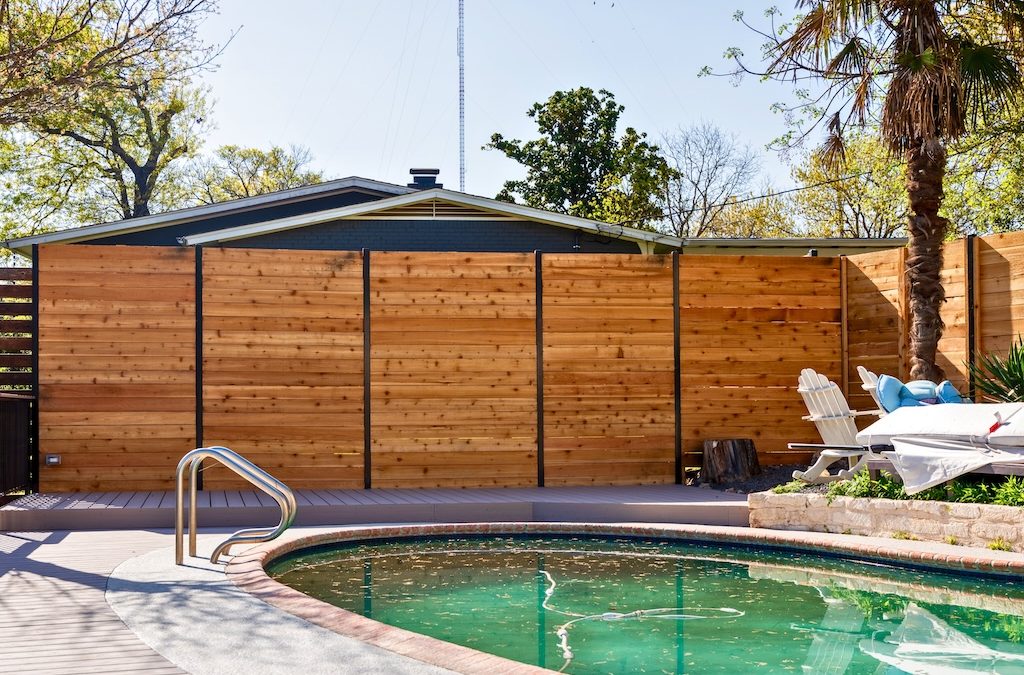
Why storms test a fence
Texas storms bring two things a fence has to survive: strong wind and heavy rain, often at the same time. Wind pushes hard against those big flat panels, and heavy rain soaks and softens the soil around the posts. Put them together and a gust hits a fence that’s suddenly standing in loosened ground, which is when things fail.
A strong, well-kept fence takes that in stride. A fence that’s already got loose posts, rotting wood, or a wobbly gate is the one that comes down. So storm prep isn’t complicated, it’s mostly about finding and fixing those weak spots before the weather finds them for you. A little work now prevents a big mess later.
Check your posts first
Start with the posts, since they’re what hold everything up against the wind. Walk the line and push firmly on posts here and there. A solid post won’t budge. One that wobbles or leans is already weak, and wind plus rain-softened soil can finish the job. Loose posts are the number one thing to catch before a storm.
If you find a post that’s shifting, it’s worth resetting before the weather turns. A single loose post doesn’t just risk itself, it puts strain on the whole section around it. Handling it early, while it’s a simple fix, is far cheaper and easier than dealing with a downed run of fence after a big blow.
Secure loose boards and rails
Next, look for anything that’s already loose. Boards that have popped free, cracked, or pulled away at the ends, and rails that are sagging or separating, all become weak points in a storm. Wind grabs a loose board and works it harder, and once one goes, it can take neighbors with it.
Tack down or replace loose boards now, while it’s a quick job. Tighten any fasteners that have backed out. A fence is stronger when every piece is doing its part, so buttoning up the small stuff before storm season means fewer gaps for the wind to exploit. It’s easy work that pays off the first time a front rolls through.
Give your gates extra attention
Gates are a common storm casualty because they’re heavy, they move, and they catch wind like a sail. Check that each gate hangs true, latches firmly, and isn’t sagging on its hinges. A gate that’s already dragging or loose is a gate that can get torn or wrenched in a strong gust.
Make sure latches actually catch and hold, too. A gate that blows open in a storm can slam, damage the fence, and let pets loose at the worst possible moment. Tightening hinges and confirming the latch works is a five-minute check that saves a lot of grief. If a gate’s really struggling, get it fixed before the weather hits.
Clear the fence line
Look at what’s around and against your fence. Overhanging tree limbs are a real hazard, since a branch that breaks in high wind can crush a section of fence in an instant. Trimming back limbs that hang over the fence line before storm season is one of the smartest prep steps you can take.
Clear away anything leaning on the fence too, like stacked wood, patio furniture, or trash bins that could become projectiles or add stress in a gust. And pull soil and mulch back from the base, since debris piled there traps water against the wood and weakens it, right when you need the fence at full strength.
Help the water drain
Since heavy rain softens the ground that holds your posts, drainage matters a lot for storm survival. Water that pools along the fence line soaks the soil right where the posts sit, loosening them just as the wind arrives. Anything that moves water away from the fence helps it stay standing.
Check that your yard grading and downspouts direct water away from the fence, not toward it. If you’ve got a spot that always turns into a puddle against the fence after rain, that’s the weak point to watch and, ideally, to fix. Good drainage is quiet insurance that pays off every single storm.
After the storm passes
Once the weather clears, walk your fence and look it over. Check for new leans, loose or missing boards, gates knocked out of square, and posts that shifted in the softened soil. Damage isn’t always obvious at a glance, so a careful look right after a storm catches problems while they’re small.
Our fence inspection guide gives you a simple checklist for exactly this. Catching post-storm damage early keeps a small fix from turning into a leaning, failing fence a few months down the line. The habit of checking after each big storm is one of the best things you can do for your fence’s lifespan.
Do not forget the little things
A few small storm-prep steps are easy to overlook but make a real difference. Bring in or tie down anything loose in the yard that a big gust could turn into a projectile, since a flying chair or planter can crack boards or knock a section loose just as easily as the wind itself can.
It’s also worth knowing where your fence is weakest before a storm, not during one. That one post that always feels a little loose, or the low corner that floods after every rain, is where trouble will start. Giving those known weak spots some attention ahead of the season is time well spent.
And keep a fence company’s number handy for after a big blow. Storm damage tends to hit lots of homes at once, so getting on the schedule early matters. We handle storm repairs for neighborhoods around Austin all season, and catching your fence right after the weather keeps a small fix from turning into a leaning, failing run.
When to call for repair
Some storm damage you can handle, like tacking a board back or tightening a latch. Other damage needs a pro: a snapped post, a leaning section, or a run of fence knocked flat. Those aren’t just cosmetic, they leave your yard open, so a prompt fence repair is worth getting on the calendar.
If a storm has really done a number on an older fence, it may be time to weigh a repair against a rebuild that’s built stronger from the start. Either way, we’re glad to take a look after the weather and give you a straight answer. Our Austin fence team handles storm damage across the metro all season long.
Quick Answers
How do I prepare my fence for a storm?
Check for loose or leaning posts and reset them, secure wobbly boards and gates, trim overhanging limbs, clear debris and furniture from the fence line, and make sure water drains away from the posts.
Why do fences fall in storms?
Wind pushes hard on the flat panels while heavy rain softens the soil around the posts. A gust hitting a fence in loosened ground is what causes failures, especially where posts were already weak.
Should I check my fence after every storm?
Yes. Walk it and look for new leans, loose or missing boards, and gates knocked out of square. Damage isn’t always obvious, and catching it early keeps a small fix from becoming a big one.
Do tree branches really threaten a fence?
Very much. A limb that breaks in high wind can crush a section instantly. Trimming back branches that hang over the fence line before storm season is one of the best prep steps you can take.
When should I call for a repair after a storm?
For anything structural, like a snapped or leaning post or a run knocked flat. Those leave your yard open, so a prompt repair matters. Small stuff like a loose board you can often handle yourself.
Storm knock your fence around? We’ll get it back up fast and solid. We’re fully insured. Call (512) 566-7567 or get a free estimate.