
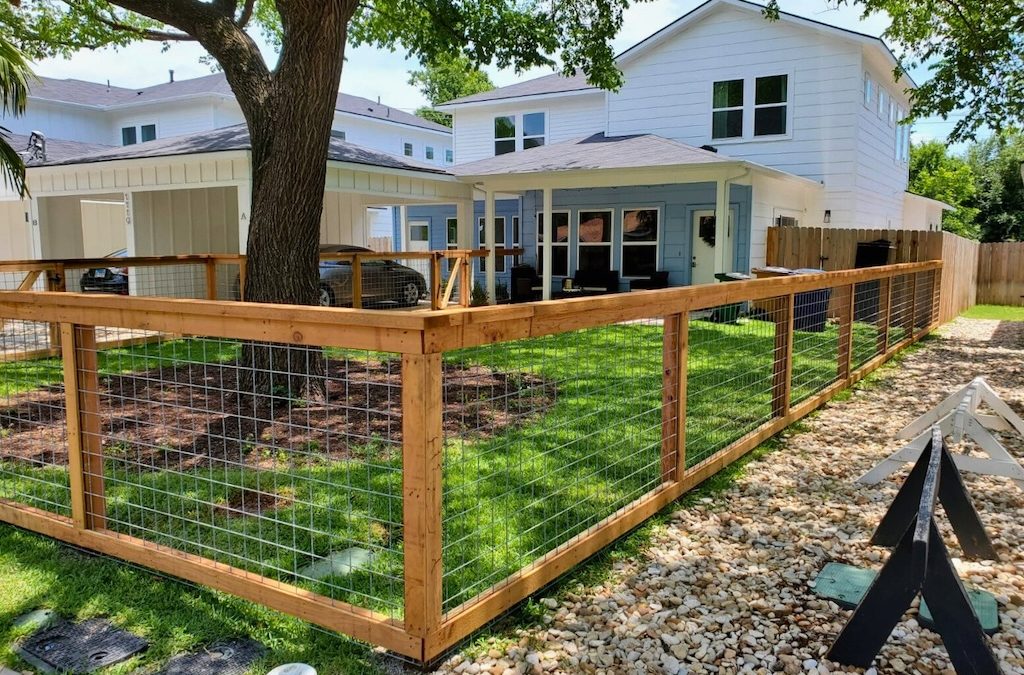
The suburbs are HOA country
If you’re fencing in the newer suburbs ringing Austin, there’s a good chance an HOA is part of the picture. Communities in Cedar Park, Leander, Round Rock, and similar areas are often master-planned, and master-planned usually means an active HOA with detailed rules about how your yard, and your fence, can look.
That’s not a bad thing, it’s just different from an older, unrestricted neighborhood in town. The HOA is there to keep the community looking consistent, and fences are a big part of that look. Our Austin fence company builds across these suburbs all the time, so we’re used to working within their rules.
Why HOAs are so common out here
The reason comes down to how these areas grew. A lot of the suburban growth around Austin happened as planned developments, built all at once with a shared vision. HOAs came along to protect that vision over time, keeping the neighborhood uniform as homes change hands and years pass.
So in a subdivision in Cedar Park or a newer part of Leander, the odds of an HOA are high. That shapes fencing in a way it doesn’t in an older, un-planned neighborhood. Knowing you’re likely dealing with an HOA from the start puts you ahead, since you can plan for the rules instead of running into them.
Expect the rules to be specific
HOA fence rules in these suburbs tend to be detailed. They often spell out the exact style, the maximum height, the approved materials, and even the stain color. Some require a specific type of fence throughout the neighborhood so every yard matches. The goal is a uniform, tidy look, and the rules make it happen.
What this means for you is less freedom to freestyle and more of a menu to choose from. That’s not necessarily limiting, plenty of great fences fit within HOA rules, but it does mean checking those rules before you fall for a design. Building what the HOA allows is the whole game in these neighborhoods.
Approval is almost always required
In HOA-heavy suburbs, you can count on needing approval before you build. Most require you to submit your fence plan to an architectural committee, which reviews the height, material, color, and placement against the rules. Only after you get the green light should the first post go in.
This adds a step and a little time, so it’s worth starting early. Skipping it is risky, since an unapproved fence can be ordered changed or removed. Treat the approval as a normal part of the project in these areas, not an optional extra, and it’s a smooth process rather than a surprise.
The city rules still apply too
Don’t forget the city on top of the HOA. Each suburb has its own fence code and often its own permit requirements, separate from the HOA’s rules. So you may have two sets of requirements to satisfy: the HOA’s for looks and consistency, and the city’s for safety and code.
The two usually work together fine, but you do have to clear both. We handle the city side through our permit partners and help you line up the HOA side too, so nothing falls through the cracks. Satisfying both is routine when you plan for it, which is exactly what building in these suburbs calls for.
It is not just paperwork, it is timing
The biggest practical difference in HOA suburbs is timing. Between HOA approval and any city permit, there’s more lead time before you can build than in an unrestricted neighborhood. If you want your fence done by a certain date, you have to start the approvals earlier to leave room for them.
This matters most in spring, when both the HOAs and the fence crews get busy at once. Starting the paperwork well ahead keeps you from waiting longer than you’d like. A little planning on the calendar goes a long way toward a fence that’s ready when you want it, not weeks behind.
How the right crew makes it easy
Working with a company that knows these suburbs takes the stress out of it. We know the kinds of rules these HOAs tend to have, we help you prepare an approval request that’s likely to pass, and we handle the city permit. You don’t have to become an expert on your neighborhood’s fine print.
For the full rundown on what HOAs look for, our guide to Austin HOA fence rules is a great next read. Between that and a crew that builds in these areas constantly, fencing in an HOA suburb becomes just another well-planned project, not a maze of rules to fight through.
Picking a fence that fits the neighborhood
Once you know the rules, the fun part is choosing a fence that fits them and still feels like yours. HOA neighborhoods usually leave plenty of room for a great-looking fence, you’re just working from an approved palette. Cedar privacy fences are a common, well-liked choice that clears most suburban HOA rules with ease.
The trick is matching your taste to the approved options rather than fighting the list. If your HOA loves traditional wood, lean into a clean, classic build. If they allow a bit more flexibility, you’ve got more room to personalize. Either way, a fence that fits the neighborhood standard tends to look right at home and hold its value.
A good fence installation in a suburb like Cedar Park or Leander is really about planning: know the rules, pick an approved design, get the green light, then build. When we handle a suburban job, we guide you through each of those, so the fence you end up with is one you love and the HOA signs off on without a fuss. That kind of planning is exactly what keeps a suburban fence project easy instead of stressful. You end up with a fence you’re proud of, approved and built right the first time.
Fencing done right in the suburbs
The takeaway for the suburbs is simple: expect an HOA, expect specific rules, and expect to get approval before building. Plan around all three and fencing in Cedar Park, Leander, or Round Rock is smooth sailing. Fight against them, and it gets frustrating fast. Planning is everything out here.
When you’re ready, we’re glad to help you pick a fence that fits your HOA’s rules and looks great on your lot. We build across the suburbs every week, so we know how to get you from idea to approved fence without the headaches. Let’s make your suburban fence project an easy one.
Quick Answers
Do Austin suburbs have strict fence rules?
Often yes. Suburbs like Cedar Park, Leander, and Round Rock are full of master-planned communities with active HOAs that set the style, height, material, and color, and require approval before you build.
Why do so many suburbs have HOAs?
Much of the suburban growth around Austin came as planned developments built with a shared look. HOAs formed to protect that look over time, keeping neighborhoods uniform as homes change hands.
Do I need approval to build a fence in a suburb HOA?
Almost always. Most require you to submit a plan to an architectural committee that reviews height, material, color, and placement. Building without approval can mean being told to change or remove the fence.
Do I still need a city permit in the suburbs?
Often yes, separate from the HOA. Each suburb has its own fence code and permit rules. You may need to satisfy both the HOA for looks and the city for safety and code.
How far ahead should I start in an HOA suburb?
Earlier than in an unrestricted area, since HOA approval and any city permit both take lead time. Starting the paperwork well ahead, especially in busy spring, keeps your fence on schedule.
Fencing in an HOA suburb like Cedar Park or Leander? We know the rules. We’re fully insured. Call (512) 566-7567 or get a free estimate.