
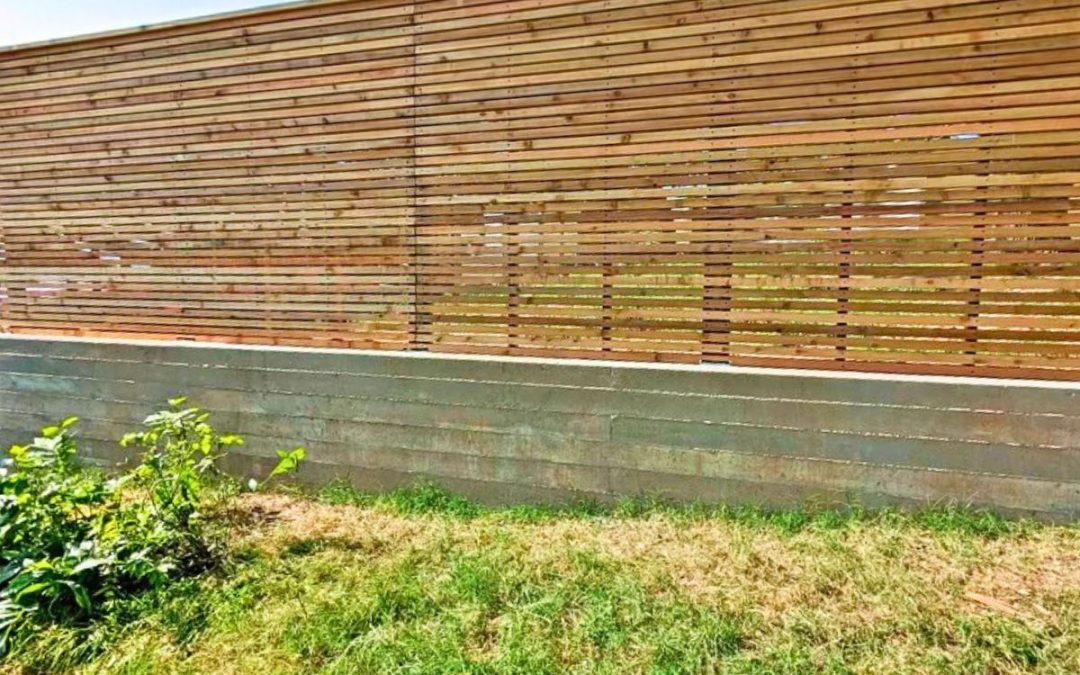
What a Builder Fence Actually Is
A builder-grade fence exists to check a box at closing: lot enclosed, done. It’s usually the thinnest acceptable pine or cedar picket, minimum rails, posts set to a production-schedule depth, and concrete poured fast. None of that is scandalous. Builders fence hundreds of lots on a deadline and the fence isn’t where they compete. But it explains the pattern every new suburb shows: fences leaning by year three, gates sagging by year two, pickets graying unevenly by the first summer. When you understand the fence was priced as an enclosure, not an asset, the decisions that follow get much easier to make.
Why These Fences Lean So Early
The soil east and north of Austin does the damage. Much of Round Rock and parts of Leander sit on expansive clay that swells with rain and shrinks in drought, and that seasonal cycle works shallow posts loose one wet spring at a time. Builder schedules rarely allow for setting posts below the active clay zone, so the posts sit exactly where the movement is. We wrote about the mechanics in why Pflugerville fences need deeper posts, and the same physics applies across the new-construction ring. A fence with good pickets on shallow posts is a countdown, not a fence.
The Move-In Inspection Worth Doing
Before the boxes are unpacked, walk your fence line with a critical eye. Push every post firmly and note any that move. Sight down each run for waves and lean. Open and close every gate and watch whether it drags or the latch barely catches. Check picket attachment, and look at where the fence meets the ground: gaps invite pets out and pests in. Photograph anything questionable, because new-construction warranties are strongest in year one and fence complaints filed early get fixed free. Ten minutes at move-in routinely saves new owners a repair bill in year three. It’s the cheapest fence work you’ll ever do.
Keep, Upgrade, or Replace
Three honest paths. Keep the builder fence when the posts are sound and the lot is enclosed to your needs, and put your money elsewhere. Upgrade when the bones are acceptable but the details aren’t: swap pickets to board-on-board for privacy, rebuild the gate with real hardware, add a top cap. Replace when the posts are shallow in active clay, because everything above a failing post is borrowed time. The economics favor deciding early. Our fence replacement service regularly rebuilds five-year-old builder fences that would have cost less to do right at year one, when the demolition was half the size.
Fencing a Bare Lot From Scratch
Some new-construction lots come bare, especially larger ones and cul-de-sac pies, and that’s the best fence situation you can be in. No demolition, no inherited shortcuts, full control of material and layout. The decisions that matter most on a bare lot: post depth matched to the actual soil, gate placement planned around how you’ll really use the yard, and utility marking before anything is dug, because new lots have fresh, shallow lines everywhere. Irrigation, low-voltage lighting, and cable drops are all recent and all vulnerable. We locate before we auger on every new-construction job, and it’s non-negotiable.
Shared Lines When Everyone Moved In Last Month
New subdivisions create a situation older neighborhoods never see: three households on a shared line, all new, no history, and a builder fence nobody chose. Who maintains it? Usually whoever’s plat it sits on, and in many communities the builder set it entirely inside one lot, which makes it that owner’s fence alone. Upgrading your side of a shared builder fence is generally fine; replacing a shared fence is a conversation. Have it early, in writing, while everyone’s still introducing themselves. The neighbors who settle fence expectations in month one never end up in the disputes we get called into at year five.
HOA Rules Arrive Before Your Furniture
Every one of these communities runs an architectural review process, and it applies to fence changes from day one, including upgrades to the builder fence you already own. Stain color, height, material, and style are all commonly regulated, and new-community HOAs enforce actively because the whole neighborhood is watching precedent get set. The process is manageable when you run it in order, and we covered it in what to check first with HOA fence rules. Submit before you build, get approval in writing, and your upgrade sails. Skip it and your brand-new fence can come with a violation letter.
Timing Around the Build Wave
New neighborhoods fence in waves. The first owners upgrade, the street notices, and suddenly every crew in the metro is quoting the same block. Two timing tips from inside that wave: first, book ahead of the spring rush, because fall and winter installs in these communities schedule faster and cure easier. Second, if several neighbors want work at once, say so. Shared mobilization on adjacent lots is real efficiency, and we pass it along when the logistics line up. The build wave is predictable. Being early in it beats being tenth in line in April.
What the Builder Warranty Actually Covers
Builder warranties on fencing are narrower than most new owners assume, and the window is short. Typically you’re covered for workmanship defects in the first year, which is real protection if you use it, and it’s why the move-in walk matters so much. What generally isn’t covered: normal weathering, soil movement, and anything the warranty calls maintenance. That’s the frustrating part, because soil movement is exactly what takes these fences down, and it doesn’t usually show up until after year one has closed. So the practical strategy is simple. Document everything in the first weeks, file anything that looks like a defect while the builder’s still obligated, and don’t wait to see whether a post settles, because by the time you’re sure, you’re paying. Read your warranty document rather than trusting what the sales office said, since the two don’t always match. And if you’re unsure whether something’s a defect or just clay being clay, we’ll look at it and tell you honestly. We aren’t the ones honoring the warranty, so we’ve got no reason to talk you out of a claim that’s legitimate.
What We Do Differently in Leander and Round Rock
Working Leander and Round Rock new construction weekly shapes how we build there: posts set below the clay movement zone every time, gates framed in steel because they take the abuse first, and layouts that respect the drainage easements these plats are full of. We’ll also tell you plainly when the builder fence is worth keeping, because it sometimes is, and our job is the right answer for your lot, not the biggest ticket. New-construction fencing rewards doing it once, correctly, at the start.
Quick Answers
Are builder fences bad quality?
They are built to a price and a schedule: acceptable pickets on shallow posts, minimum hardware. The common failure is posts set above the active clay zone, which is why so many lean by year three.
Should I replace my builder fence right away?
Not automatically. If posts are sound, keep or upgrade it. If posts are shallow in expansive clay, replacing early costs less than replacing after it fails.
Who owns the fence between two new-construction lots?
Whichever lot the fence sits on per the plat. Many builders set fences fully inside one lot, making it that owner alone. Confirm on the survey before assuming it is shared.
Do HOA fence rules apply to upgrading a builder fence?
Yes, from day one. Stain, height, material, and style changes typically need architectural approval even when the fence is already yours.
When is the best time to fence in a new neighborhood?
Ahead of the spring wave. Fall and winter installs schedule faster, cure easier, and beat the block-wide rush that hits every new community.
Get Your Free Fence Estimate
Call (512) 566-7567 or request your free fence estimate. We’ll assess the builder fence honestly, or spec the bare lot right the first time. Fully insured, 1-year workmanship warranty.