
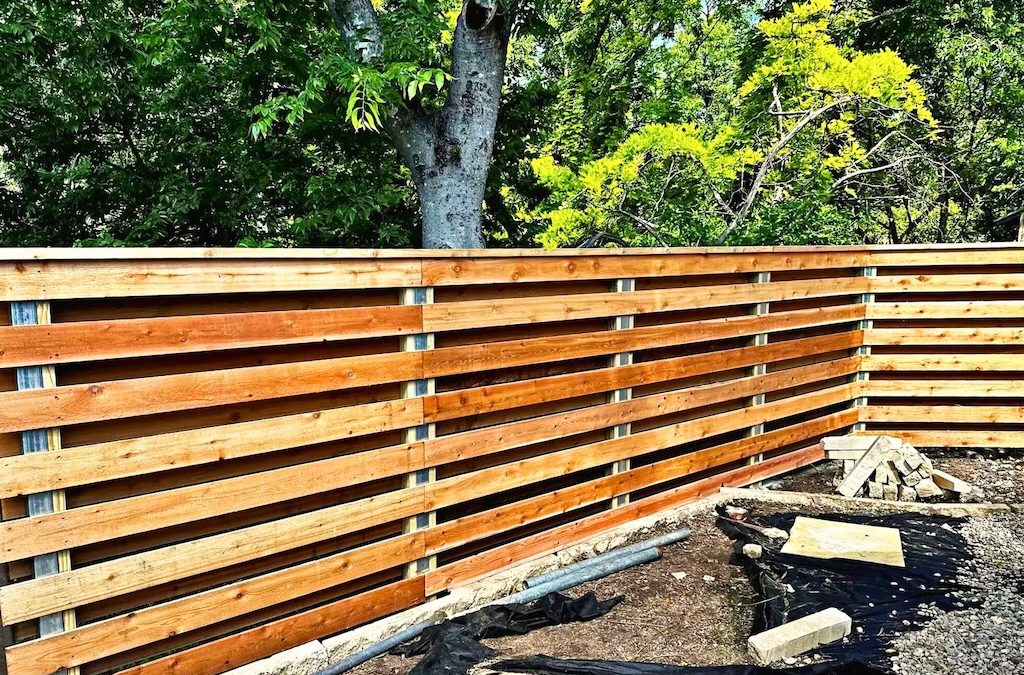
Pool fences follow their own rulebook
Most fences have some flexibility, but a pool fence is different. It’s regulated as a safety barrier, with specific code requirements meant to keep young children away from the water. Texas and local codes spell out the height, the gaps, and the gate rules, and an inspector will check them. This is a fence you build to the standard, not to taste.
That’s a good thing, because those rules are built on preventing drownings. The details can feel picky, but each one closes off a way a small child could get to the pool. Understanding the requirements before you build means your fence passes inspection the first time and, more importantly, actually does its job.
Minimum barrier height
The code sets a minimum height for a pool barrier, and it’s taller than what people often picture for a low decorative fence. The height requirement exists so a young child can’t simply climb over the top. A fence that falls short of the minimum won’t pass, and it wouldn’t keep a determined toddler out anyway.
Height is measured from the outside, the side a child would approach from, since that’s the climb that matters. Because the exact number and how it’s measured can vary by local code, it’s worth confirming for your specific area. The point is simple: the barrier has to be tall enough to actually stop a small child.
Gaps between and under the pickets
Height alone isn’t enough, so the code also limits gaps. There are tight rules on how far apart vertical pickets can be, so a child can’t squeeze between them, and on how much space is allowed at the bottom, so a child can’t crawl under. Both openings have to be small enough to block a small body.
These gap rules are a big reason a pool fence can’t just be any old fence. The spacing has to meet the standard all the way around. If the pickets are too far apart or the fence sits too high off the ground, it fails inspection, even if it’s plenty tall. Getting the gaps right is as important as the height.
Rules for a climbable surface
Codes also care about what the fence gives a child to grip. Horizontal rails or wide gaps on the outside face can act like a ladder, so the rules limit anything that turns the barrier into an easy climb. The outside of a pool fence needs to be smooth and hard to scale, not a set of built-in footholds.
This is why certain fence styles are favored for pools and others aren’t. A design that’s perfectly fine as a yard fence might fail as a pool barrier if it’s easy to climb. It’s another spot where meeting the code and keeping kids safe are really the same goal, just written down as a rule.
The gate requirements are strict
The gate is where the code is toughest, and for good reason. A pool gate must be self-closing, so it swings shut on its own, and self-latching, so it locks without anyone remembering to. The latch has to sit at a required height, up out of a small child’s reach, and the gate typically must swing away from the pool.
These gate rules exist because most pool accidents involve a gate that was left open or didn’t latch, not a child scaling the fence. A self-closing, self-latching gate removes human error from the equation. An inspector will test the gate, so this is the one part of a pool fence you absolutely cannot cut a corner on.
Pool fences almost always need a permit
Because of all these requirements, a pool fence is one of the few fences that nearly always needs a permit, regardless of height. The permit and inspection process is how the city confirms your barrier actually meets the safety code. Skipping it isn’t just a paperwork problem, it can be a serious safety and liability one.
Our guide to getting a fence permit in Austin covers how that process works. For a pool fence specifically, expect the requirements to be stricter and the inspection to focus on the safety details, the height, the gaps, and that all-important gate. It’s worth doing right the first time.
How the code and safety fit together
Every one of these rules traces back to a single aim: keeping a child from reaching the water alone. The height stops the climb, the gaps stop the squeeze, the anti-climb rules stop the boost, and the gate stops the walk-in. Meet the code, and you’ve closed every common route to the pool at once.
If you want the safety side in plain terms, our companion guide on pool fence safety covers the why behind the rules. Together, the code and the safety habits are what make a pool area genuinely secure, not just technically compliant. Both matter, and they point the same direction.
Getting it inspected and approved
Since a pool fence has to pass inspection, it helps to know what that looks like. After the barrier is built, an inspector checks the height, the gaps between and under the pickets, the anti-climb surface, and the gate’s self-closing, self-latching action. If any one falls short, it fails, and you’re looking at a fix and a re-inspection.
That’s why the details can’t be close-enough. A gap a half-inch too wide or a latch set a bit too low is exactly what gets flagged. Building to the standard from the start, rather than hoping to squeak by, is what makes the inspection a formality instead of a hurdle. It also means the barrier actually does its job.
The simplest path is to build with a crew that knows the pool code and handles the permit and inspection for you. Our Austin fence pros build pool barriers to code across the metro, so yours passes the first time and keeps your pool area both legal and safe for the people who matter most.
Making sure your pool fence passes
The surest way to pass inspection is to build with someone who knows the pool code and handles the permit for you. Small misses, a gap a bit too wide, a latch a touch too low, a gate that doesn’t self-close, are exactly what an inspector catches, and they mean a redo. Getting the details right up front avoids that.
We build code-compliant pool fences for homes across Austin, and we take care of the permit and the requirements so your barrier passes and protects. When you’re ready to fence your pool the right way, our team will make sure it meets every rule from height to gate.
Quick Answers
What does Texas code require for a pool fence?
A minimum barrier height, tight limits on gaps between and under the pickets, an anti-climb outside face, and a self-closing, self-latching gate with a high latch. Pool fences also almost always need a permit.
How tall does a pool fence have to be?
The code sets a minimum height, taller than a typical decorative fence, so a child can’t climb over. The exact number can vary by local code, so it’s worth confirming for your area before building.
What are the pool gate rules?
The gate must be self-closing and self-latching, with the latch set high out of a child’s reach, and it usually must swing away from the pool. Inspectors test the gate, so it can’t be cut short.
Do I need a permit for a pool fence?
Almost always, regardless of height. The permit and inspection confirm your barrier meets the safety code. Skipping it can be a safety and liability problem, not just a paperwork one.
Why are the gaps in a pool fence regulated?
So a small child can’t squeeze between the pickets or crawl underneath. The code limits both the spacing between pickets and the gap at the bottom, and a fence that misses these fails inspection.
Need your pool fence to pass code and inspection? We build them to the standard. We’re fully insured. Call (512) 566-7567 or get a free estimate.