
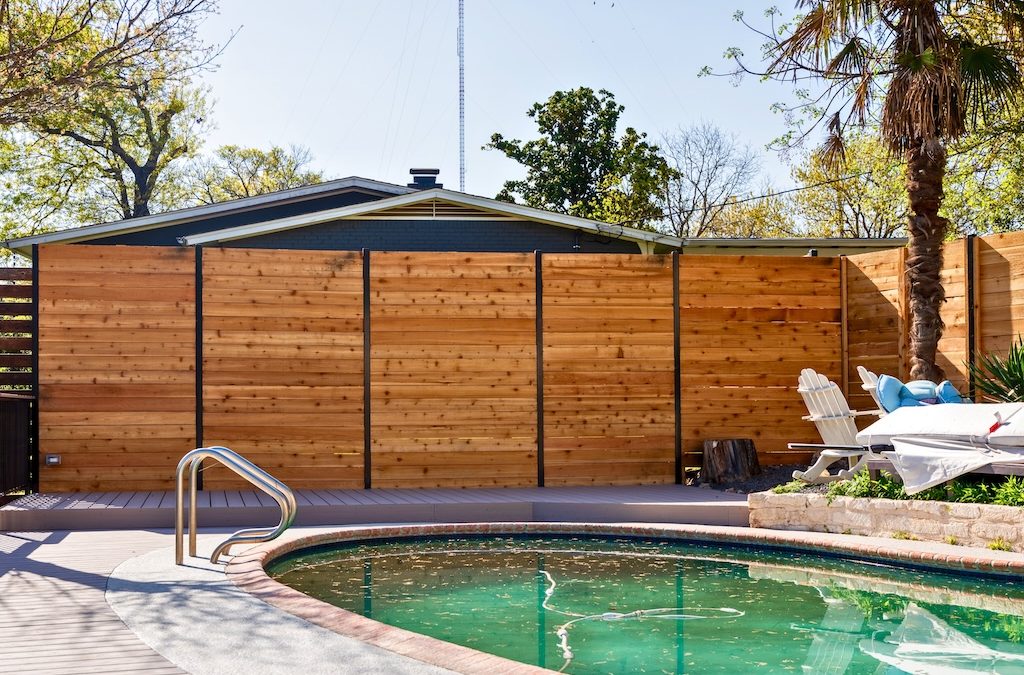
Deciding whether to repair or replace a fence comes down to a few questions: how much of it is damaged, how old it is, whether the posts are still solid, and whether repairs would cost more than they’re worth. A small, isolated problem usually means repair. Widespread damage on an old fence usually means it’s time to replace.
A decision, not a guess
When a fence starts failing, the first question is always the same: fix it or start over? It can feel like a toss-up, but it really isn’t. There’s a handful of straightforward questions that point you to the right answer nearly every time. Walk through them, and the call gets a lot clearer.
This guide is the quick decision framework. For a full side-by-side of what each route involves, our repair or replace guide goes deeper. Here, the goal is simpler: help you look at your own fence and figure out which way it’s leaning, so you’re making a decision, not a guess.
Question 1: How much is actually damaged?
Start with the scope. Is the problem one leaning post and a couple of cracked boards, or is it damage spread all along the fence? A small, contained issue in an otherwise healthy fence is the classic case for a repair. There’s no reason to tear out a whole fence over one bad section.
But when the damage shows up everywhere, in most of the posts, boards failing up and down the line, the math flips. Fixing a little here and a little there on a fence that’s giving out all over quickly turns into a losing game. Widespread damage is the single biggest sign it’s time to replace.
Question 2: How old is the fence?
Age matters a lot. A fence that’s only a few years old and takes some storm damage is almost always worth repairing, since it’s got plenty of life left. You’re just fixing a young fence that had bad luck, and it’ll keep serving you for years after.
A fence near the end of its natural life is a different story. If a wood fence is pushing 15 or 20 years and starting to fail, repairs are just buying a little time before the next problem. At that point, money spent patching an old fence is often better put toward a new one that starts the clock over.
Question 3: Are the posts still solid?
The posts are the heart of the decision, because they hold everything up. If the posts are still straight and solid, you’re in good shape, since boards and rails are easy to swap. A fence with good bones is very repairable, even if the surface looks rough. Healthy posts lean you toward repair.
If the posts themselves are leaning, loose, or rotting across the fence, that’s a strong replace signal. Resetting a post or two is routine, but when most of them are going, you’re rebuilding the fence’s foundation piece by piece, which rarely makes sense. Bad posts usually mean it’s time for a new fence.
Question 4: What will repairs really cost?
Weigh the repair against the value. If a repair is a small fraction of a new fence and gets you years more use, it’s an easy yes. That’s most repairs, and they’re the smart, thrifty move. Fixing what’s broken and moving on is often exactly the right call.
The picture changes when repairs start stacking up toward the cost of replacing. If you’re patching the same fence again and again, or one big repair approaches the price of new, replacing is usually the better spend. A fence that keeps needing work is telling you something, and it’s worth listening.
Question 5: What do you want going forward?
Sometimes the choice isn’t only about damage. Maybe your old fence is fine but you want more privacy, a different style, or a material that lasts longer with less upkeep. If you’ve been thinking about a change anyway, a failing section can be the nudge to replace rather than repair back to a fence you didn’t love.
On the flip side, if you’re happy with your fence and just want it working again, a repair keeps what you like without the bigger project. There’s no wrong answer here, it just helps to be honest about whether you’re solving a problem or ready for an upgrade. Both are perfectly good reasons.
Some common scenarios
A few real-world cases make it click. A storm knocks over one section of a five-year-old fence? Repair, easily. A 4-year-old fence with a couple of cracked boards? Repair. A leaning post here or there on an otherwise solid fence? Reset it. These are all clear repairs, and there’s no reason to overthink them.
Now the other side. A 20-year-old wood fence leaning in several spots with soft, graying boards? Replace. A fence you’ve already patched three times this year? Replace. Posts rotting up and down the line? Replace. When you see the pattern, the right answer tends to jump out at you.
Why an honest opinion matters
One thing worth looking for in whoever you ask is honesty about the answer. A company that makes its money on replacements has a reason to steer you toward a new fence, even when a repair would do. That’s exactly the kind of nudge you don’t want when you’re trying to make a smart call.
A trustworthy crew tells you when a repair is the better move, even though a replacement would be a bigger job for them. It’s the same principle as any good advice: you want a read on your fence, not a sales pitch. The right answer for you and the biggest job for them aren’t always the same thing.
That’s the approach our Austin fence team takes. We’ll tell you plainly whether your fence has more good years in it or whether it’s time to start fresh, and we’ll explain why. When the recommendation lines up with what’s actually best for your fence, you can trust the call you make. And if a repair really is the right move, we’ll happily do it and get you back to a solid fence.
Getting a straight answer
If you’ve walked the questions and you’re still on the fence, that’s exactly what a good crew is for. We’ll look at your posts, the extent of the damage, and the age of the fence, and give you an honest read on whether a repair will hold or whether a replacement is the smarter long-term move.
A quick inspection often settles it, since the condition of the posts tells most of the story. We build for homeowners across Austin every week, and we’d rather tell you a repair will do the job than sell you a fence you don’t need. When you want a clear call, we’re glad to give you one.
Quick Answers
Should I repair or replace my fence?
Repair if the damage is small and contained and the posts are solid. Replace if the damage is widespread, the fence is old, or the posts are failing across the line. Cost versus value settles the close calls.
When is a fence too old to repair?
Once a wood fence is pushing 15 to 20 years and starting to fail in several spots, repairs mostly buy time. At that point, money is often better put toward a new fence that starts fresh.
Do the posts decide repair or replace?
Largely, yes. Solid, straight posts mean a fence is very repairable, since boards swap easily. Posts that are leaning or rotting across the fence are a strong sign it’s time to replace.
Is it cheaper to repair or replace a fence?
A repair is cheaper up front and usually the right move for small, isolated damage. But repeated repairs or one big fix approaching the cost of new often make replacing the better long-term value.
Can one section of fence be replaced instead of the whole thing?
Often yes. If the rest of the fence is solid, replacing just the damaged section is a fine repair. It’s when damage is spread across the whole fence that a full replacement makes more sense.
Torn between a repair and a rebuild? We’ll take a look and give you a straight answer. We’re fully insured. Call (512) 566-7567 or get a free estimate.