
Some of the Hardest Ground We Work
West Lake Hills is the most demanding terrain we fence anywhere in the metro, and it’s worth being plain about that.
The lots are steep. Not gently sloped, genuinely steep, with drops that change the whole approach to a fence line. The rock sits close to the surface in most places. The trees are mature and protected, and what’s growing on these properties is frequently worth more than the fence.
That combination rules out quoting from a map. We won’t price a West Lake Hills job without walking it, because the three constraints interact. A line that avoids a protected tree might run straight into shallow rock on a slope, and that’s a different footing again.
It also means we’re slower and we’d rather say so. Crews that treat this like flat-lot work either leave the fence badly supported on the downhill side or cut roots they shouldn’t have touched.
Building on a Slope
A fence on real grade either steps down in sections or racks to follow the ground.
Stepped panels stay level and read as deliberate, which suits a formal boundary. They leave triangular gaps at the base, which matters if you’re containing a dog or a small child.
Racked panels follow the contour and keep the base tight. On a steep run they look more natural and they close those gaps, though the fence itself reads as less formal.
On the steepest sections the footings change too. A post on a slope takes load unevenly, and the downhill side needs more support than a standard footing gives it. Skipping that is the single most common reason a hillside fence starts leaning within a few years.
We’ll walk the line and show you both options on your actual ground, because the right answer changes between one side of a property and the other.
Trees, Roots and What Not to Cut
The tree cover here is part of why people live in West Lake Hills, and it’s the constraint we take most seriously.
We route fence lines around root systems rather than through them. Cutting a major root to save an hour of work can cost the homeowner a mature tree a few years later, and on a property like this that’s an expensive and irreversible trade.
In practice that means adjusting the line slightly, changing post spacing, or occasionally recommending a different design for one section. All of those are cheaper than losing a tree.
There are also local protections on tree removal and root disturbance in this area, which is another reason to plan the line rather than improvise it.
If a fence genuinely can’t go where you want it without damaging a tree, we’ll tell you, and we’ll suggest where it can go instead.
What We Do in West Lake Hills
Fence replacement on established properties, which is most of the work here.
Repairs and post resets, particularly on hillside runs where downhill posts have given way first.
New installation in cedar, ornamental iron, aluminum and hog wire framed in cedar.
Drive gates on sloped approaches, with openers and posts sized for the weight and the grade.
Temporary and construction fencing, which comes up here regularly given how much building and renovation goes on.
Staining and sealing, carried out after repairs rather than over the top of them.
Temporary and Construction Fencing
There’s enough building and renovation in this area that site fencing is a regular request, and it’s a straightforward job we’re happy to take.
Temporary panel fencing secures a site, keeps the public out and satisfies most requirements without anything permanent going into the ground.
On a sloped or wooded lot it needs more thought than flat ground does, because panels want to sit stable without being anchored into roots or rock that will be built on later.
We install, maintain and remove it, and we can switch straight into the permanent fence once the work is finished, which usually saves a mobilization.
Views and Open Designs
Many of these properties have a view worth protecting, and the instinct to fence a boundary solidly often works against it.
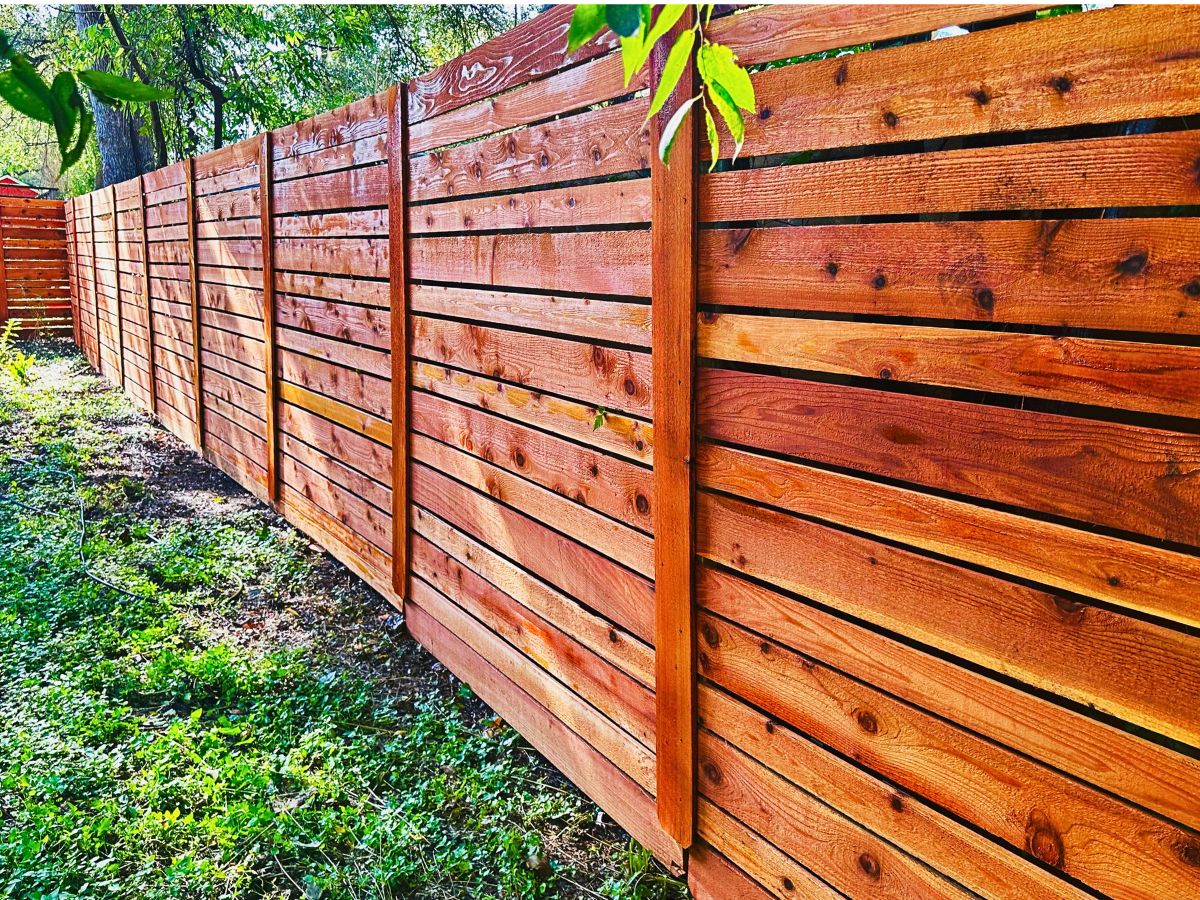
We build a good deal of low ornamental iron, aluminum and hog wire framed in cedar here. Those hold a line and keep the sightline, and on an exposed hillside they take far less wind than a solid panel.
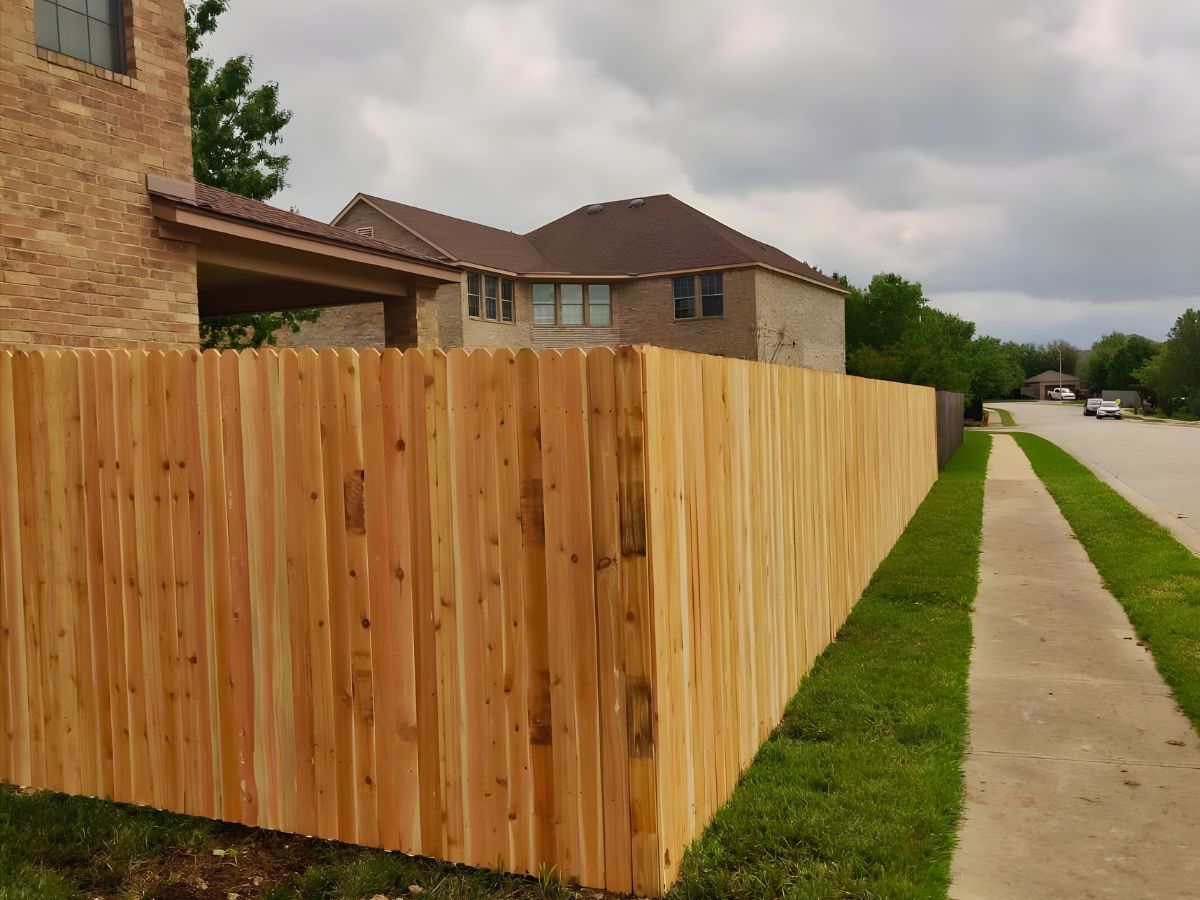
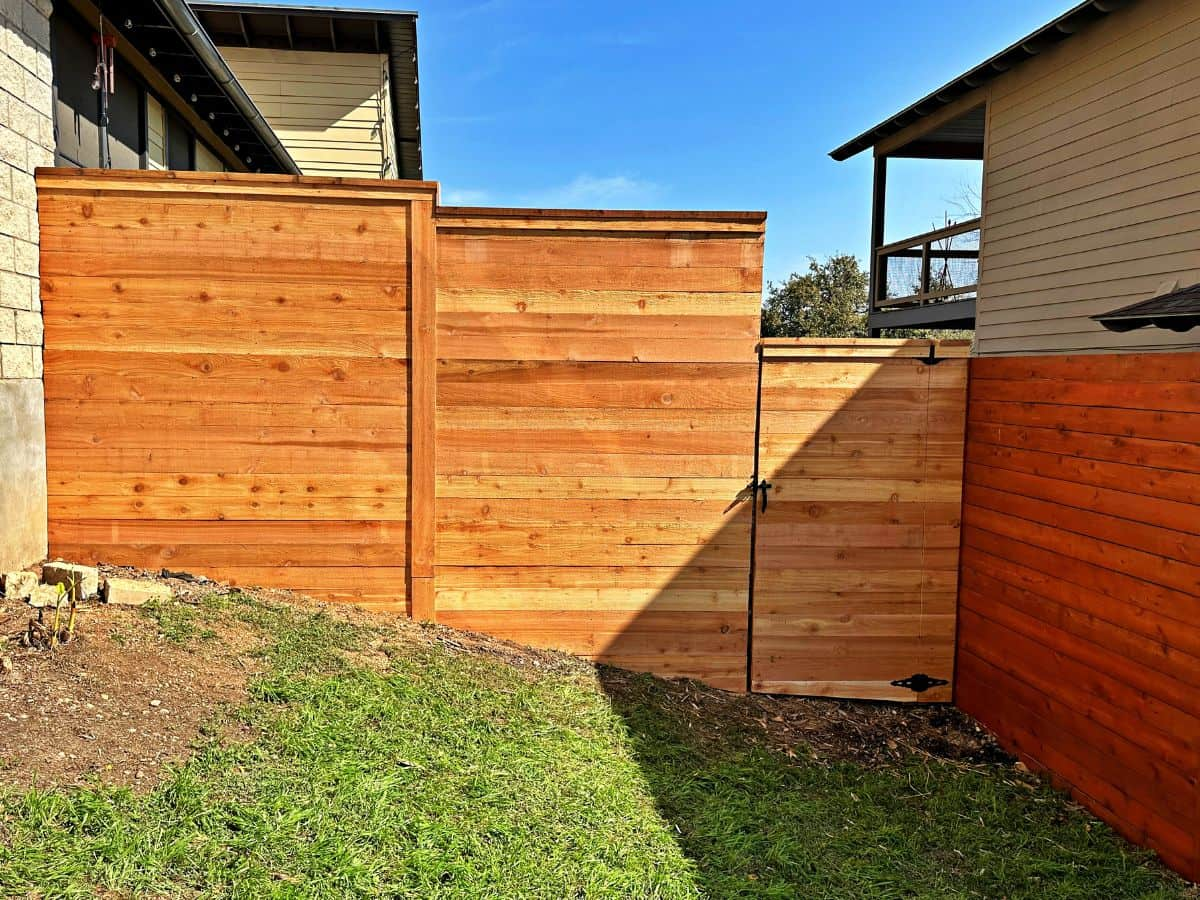
The usual answer is a mix. Solid cedar where you’re screening a specific neighbor or a road, open fencing where the view is the point, with the transition placed where it reads as intentional.
It costs nothing to think about it that way, and the result is considerably better than fencing a perimeter all the same.
Approvals
West Lake Hills has its own rules in addition to anything an association requires, and tree protection in particular is taken seriously here.
That means the planning stage matters more than it does elsewhere. Where the line runs, what comes out of the ground and what gets disturbed are all worth confirming before a crew arrives rather than after.
We work with trusted third-party permit partners and handle that paperwork as part of the job.
If your property hasn’t had its line confirmed in some time, a survey before a replacement is worth the cost. On wooded sloped lots the old fence is not always where the boundary is.

What Working With Us Looks Like
We walk the property first, always. On this terrain there’s no other honest way to quote.
We’ll talk about grade, rock, trees and sightlines, and we’ll tell you where the design should change rather than forcing one approach around the whole boundary.
You get a written quote with the work itemized, including how the slope is handled and whether we expect to core through rock.
We’re fully insured. If part of a fence can be repaired rather than replaced, we’ll show you the posts that told us so.
Why Replacement Here Is Not a Like-for-Like Job
Most fences we replace in West Lake Hills have been standing twenty years or more, and the property has changed around them.
Trees that were modest when the fence went in now have canopies and root systems that reach well past the line. Planting has matured against it. Retaining walls and terracing have been added. Slopes have crept.
All of which means you can’t simply pull the old fence and drop a new one into the same holes. Some of those holes are now under roots that weren’t there, or in ground that’s moved.
We plan a replacement around what’s grown since, which sometimes means shifting the line slightly, sometimes changing the panel type on one section, and occasionally recommending that a short stretch stays where it is because moving it would cost a tree.
It takes longer at the quoting stage. It produces a fence that fits the property as it is now rather than as it was two decades ago.
Frequently Asked Questions
Can you fence a steep lot?
Yes, and it’s most of what we do here. The fence either steps down in sections or racks to follow the ground, and the downhill posts need more support than a standard footing. We’ll walk the line and show you both options on your own ground.
Will you cut tree roots to get the fence line straight?
No. We route around root systems instead. Cutting a major root to save an hour can cost a mature tree a few years later, and on these properties that’s not a trade worth making.
Do you provide temporary construction fencing?
Yes. We install, maintain and remove site fencing, and we can move straight into the permanent fence when the work finishes, which usually saves a separate mobilization.
Will a fence block my view?
It will if you run a solid one across the view line. We usually mix it, with solid cedar where you’re screening something and low iron or hog wire where the view matters. Open designs also take far less wind on a hillside.
Why do you insist on walking the property before quoting?
Because grade, rock and trees interact here, and none of them show up on a map. A line that avoids a protected tree can run into shallow rock on a slope, and that changes the footing. Quoting without seeing it would be guessing.
Do I need approval before building?
Usually yes, and tree protection is taken seriously in this area. We work with trusted third-party permit partners and handle that as part of the job.
Are you insured?
Yes, we’re fully insured on every job.
Get a Free Estimate
If you want a straight answer on what your fence needs, we’ll come out and give you one. Walk the line with us, tell us what you’re trying to solve, and we’ll put it in writing with everything itemized. No pressure attached.