
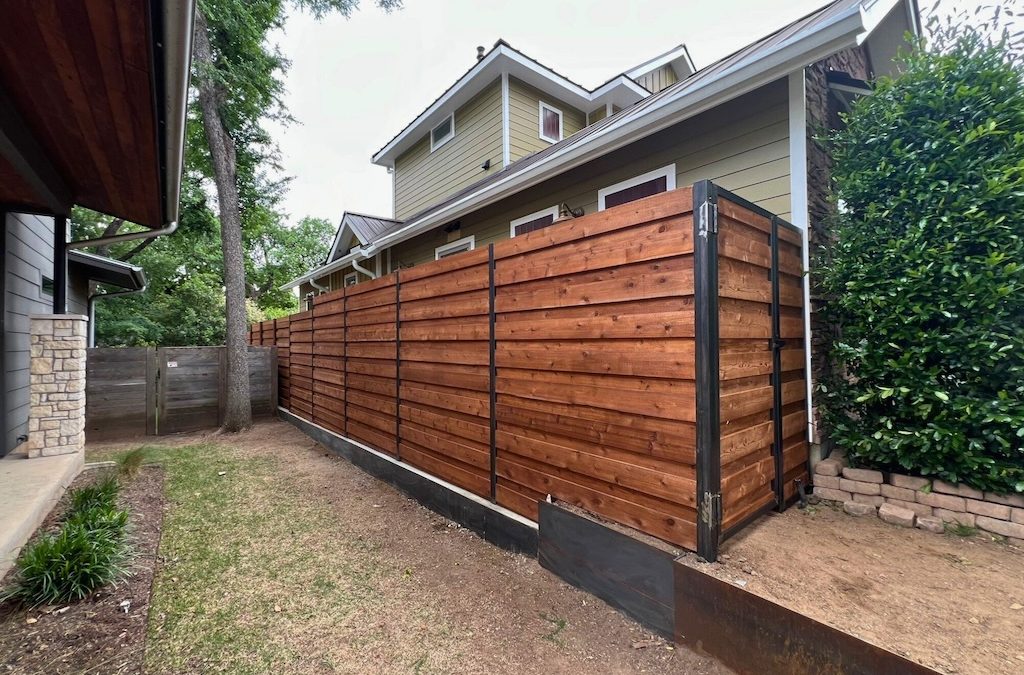
Cedar and pine are the two most common wood fences in Austin. Cedar lasts longer and handles the heat, bugs, and rot better, so it costs more up front. Pine costs less but needs more care and doesn’t last as long. For most Austin yards, cedar is the better long-term pick, but pine still has its place.
Why the Texas climate is the real test
Austin is hard on wood. Our summers are long, hot, and dry, and then a big storm dumps rain all at once. Wood soaks up that water, swells, then dries out and shrinks in the heat. It does this over and over, season after season. That constant movement is what warps boards, pops nails, and wears a fence down.
So the real question isn’t just which wood looks nice. It’s which wood holds up to this cycle year after year. That’s where cedar and pine start to pull apart. Our Austin fence company builds both, and we see the difference play out in yards all over town.
How cedar handles the heat
Cedar deals with our climate better than most woods. It has natural oils built right into the grain that help it resist warping, cracking, and splitting as it moves. Those same oils make it more stable when the weather swings from bone dry to soaked and back again.
Pine moves more. It swells and shrinks harder with each wet-dry cycle, so its boards are more likely to cup, twist, or split over time. Pressure-treated pine holds up better than raw pine, but it still can’t match cedar’s natural stability in our heat.
Bugs and rot
Central Texas has termites, and after a wet spell there’s plenty of moisture in the soil for rot to take hold. This is another spot where cedar shines. Its natural oils are something bugs don’t like, and it resists rot far better than untreated softwoods. That’s a big deal in Austin yards, where the bugs and the wet spells are both very real.
Pine doesn’t have that built-in shield. Most pine sold for fences is pressure-treated to fight rot and insects, which helps a lot. But over the years, cut ends and worn spots can still break down faster than cedar, especially where the wood meets the ground.
How long does each one last?
With normal care in Austin, a cedar fence often lasts 15 to 20 years, and a well-kept one can go even longer. A pine fence usually lands closer to 8 to 12 years, depending on how it’s treated and where it sits. So cedar can easily last twice as long as pine in the same yard.
Where the fence sits matters too. A fence baking in full sun on heavy clay works a lot harder than one in a shaded, level yard with good drainage. When a fence does reach the end of its life, our repair or replace guide helps you decide whether to patch it or start fresh.
Care and upkeep
Both woods last longer if you stain or seal them. A good stain keeps water out of the grain and slows the fading that our sun causes. Cedar can usually go a little longer between coats. Pine needs it sooner and more often to make up for its softer, thirstier grain.
A quick check every season helps too. Look for loose boards, leaning posts, and spots where water pools against the wood. Catching small issues early keeps them from turning into big repairs. Our fence inspection guide shows exactly what to watch for.
What about the look of each wood?
Looks matter too, since you’ll see this fence every day for years. Cedar has a warm, rich color with a tight, even grain, and a lot of folks love it enough to leave it natural for a while before staining. It weathers to a soft silver-gray if you let it go, or you can lock in the color with a stain. Either way, it tends to look good doing it.
Pine starts out lighter and a bit plainer, and it usually gets painted or stained to give it more character and to protect it. That’s not a knock on pine. A freshly stained pine fence can look sharp. It just means pine leans on that finish more than cedar does, both for looks and for cover. If you like the idea of painting your fence a color to match your home, pine takes paint well and gives you that option at a lower starting cost.
Whichever wood you choose, a stain or seal every few years is what keeps that good look going. Our sun fades bare wood faster than most people expect, so a little upkeep goes a long way here. We build with both woods, so we can show you how each one ages and help you pick the look you’ll be happy with down the line.
So which one should you pick?
Pick cedar if you want a fence that lasts, shrugs off the heat and bugs, and needs less babysitting. It costs more up front, but spread over 15 to 20 years, it often works out cheaper than replacing a pine fence twice. See styles and finishes on our cedar fence page.
Pick pine if you want to spend less to start and you don’t mind more upkeep, or if it’s a fence you don’t need to last decades. Either way, remember this: good posts set at the right depth matter just as much as the wood on top. A great board on a shallow post still leans. We handle both in our fence installation service.
Quick Answers
Is cedar or pine better for a Texas fence?
Cedar is the stronger pick for most Austin yards. It handles heat, bugs, and rot better and lasts longer. Pine costs less up front but needs more care and won’t last as long.
How long does a cedar fence last in Austin?
With normal care, a cedar fence often lasts 15 to 20 years or more here, while pine usually lasts 8 to 12. Staining either one helps it last longer.
Does pine need more care than cedar?
Yes. Pine needs staining or sealing sooner and more often because its grain is softer and thirstier. Cedar’s natural oils let it go a bit longer between treatments.
Is pressure-treated pine as good as cedar?
It’s better than raw pine and resists rot and bugs well, but it still moves more in our wet-dry cycles and generally doesn’t last as long as cedar.
Do both fences need staining?
Both last longer when you stain or seal them, since it blocks water and slows sun fading. It’s worth doing every few years for either wood.
Trying to choose between cedar and pine? We’ll look at your yard and give you a clear, honest answer. We’re fully insured. Call (512) 566-7567 or get a free estimate.