
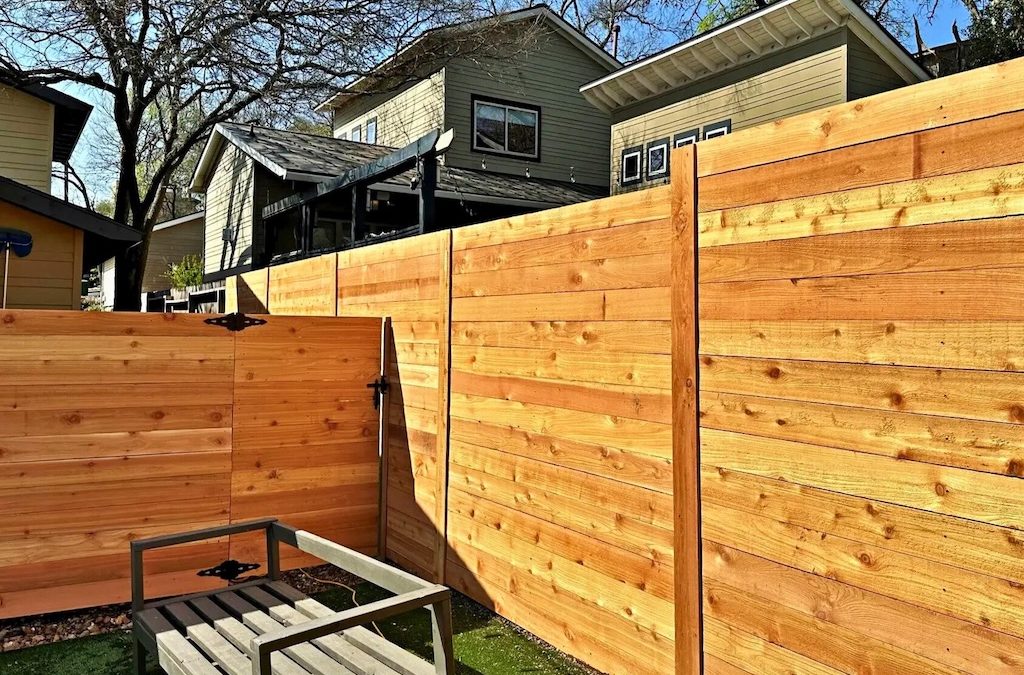
Why cities limit fence height at all
Height limits aren’t there to make your life harder. They exist so fences stay safe and neighborly. A rule that keeps front-yard fences low protects sight lines along the street, so drivers can see kids, pets, and other cars. Back-yard limits keep a fence from towering over the folks next door. It’s really about safety and getting along.
Because each city sets its own code, the exact rules differ around the metro. There’s no single Austin-area number that covers everyone. That’s the whole reason a post like this is useful: to show the general pattern, and to remind you that the final word always comes from your own city and your own address.
The general pattern you will see
Even though the details vary, most Austin-area cities follow a similar shape. Back-yard and side-yard privacy fences are usually allowed up to around 6 feet, and sometimes up to 8 feet with the right approval. Front-yard fences are kept much lower, often in the range of 3 to 4 feet, to keep the streetscape open.
Corner lots almost always get special treatment, since a tall fence near an intersection can block the view of oncoming traffic. So a rough rule of thumb is: taller in the back, shorter in the front, and extra care on a corner. Just remember, that’s the pattern, not a promise for your exact lot.
Austin proper
Inside the city of Austin, the rules follow that same back-tall, front-short idea, with their own specific numbers and their own corner-lot requirements. Height is also tied to where the fence sits relative to the property line, which is its own detail worth understanding before you build.
We cover the city’s approach in depth in our guide to fence height and property line rules. If you’re inside Austin, start there for the specifics. If you’re in a suburb, read on, because your city likely does things a little differently from Austin proper, even if the general idea is the same.
The suburbs each set their own rules
This is where people get tripped up. The suburbs ringing Austin, places like Round Rock, Cedar Park, Pflugerville, Leander, and Georgetown, each run their own code. The allowed heights, the front-yard limits, and the corner-lot rules can all differ from Austin and from each other. Close towns don’t guarantee identical rules.
So if you live in Round Rock or any other suburb, don’t assume the Austin numbers apply to you. Check your own city’s fence code before you plan. It’s a quick step that saves a lot of grief, since building to the wrong city’s rule is an easy and costly mistake to make.
Corner lots and the sight triangle
Corner lots deserve their own mention because they trip up so many projects. Near where two streets meet, cities usually limit fence height inside what’s called the sight triangle, the open zone a driver needs to see across. A tall solid fence there can hide a car or a child stepping off the curb, so the rules keep it low.
If you’re on a corner, this single rule may shape your fence more than anything else. It doesn’t mean you can’t have a great fence, it just means the height and placement near the intersection have to follow the local sight-triangle rule. We check this on every corner-lot job so nothing has to come down later.
Your HOA can be stricter
Here’s the layer people forget: even when your city allows a certain height, your HOA can be stricter. Many neighborhoods set their own rules on height, style, material, and color, and those apply on top of the city code. The HOA almost never loosens the rules, only tightens them.
So you really have two rulebooks to satisfy: the city and the HOA. Skipping the HOA can mean being told to change the fence later, even if the city was fine with it. Our guide to Austin HOA fence rules covers what to look for, and it’s smart to check both before you commit to a height.
What happens if you build too tall
Going over the limit can get expensive. If a fence breaks the height rule, the city can make you modify or take it down, which means paying to fix a fence you just finished. An HOA can do the same on its end. Neither is a fun way to learn where the line was.
It can also surface when you sell, since a fence that doesn’t meet code can raise a flag with buyers or inspectors. The good news is all of this is avoidable by confirming the rules up front. Building to the right height the first time is far cheaper than cutting one down later.
What about new construction and re-dos?
A couple of situations come up a lot. If you’re building on a brand-new lot in a fresh subdivision, the developer or HOA may have set fence rules for the whole neighborhood, sometimes even a required style or height. It’s worth asking about those before you plan, since they can be stricter than the city’s baseline rule.
Replacing an old fence is the other common case. If you keep the same height and the same spot, you’re usually fine, since you’re not really changing anything. But if you want to go taller than the old fence, you’re back to checking the current limits, which may have changed since the original went up years ago.
Either way, the safe habit is the same: confirm before you build, not after. A quick check of your city’s current rules and your HOA’s guidelines takes the guesswork out of it. It’s a small step that keeps you from the one outcome nobody wants, which is being told to shorten a fence you just paid to put up.
How to check yours, the easy way
The simplest way to get your height right is to let a company that builds around the metro handle it. We know how the rules tend to vary from city to city, and we work with permit partners who confirm the specifics for your address. You don’t have to decode any codebooks yourself.
We’ll look at your lot, check whether it’s a corner, factor in your HOA, and design a fence that fits the rules and still gives you what you want. If a permit is needed, we take care of that too. When you’re ready, our Austin fence team will make sure your height is right before a single post goes in.
Quick Answers
How tall can a fence be in the Austin area?
Most cities allow back-yard privacy fences up to around 6 feet, sometimes 8 with approval, and keep front-yard fences lower, often 3 to 4 feet. The exact limit depends on your city and lot.
Are fence height rules the same in every suburb?
No. Round Rock, Cedar Park, Pflugerville, and the other suburbs each set their own code. Heights and corner-lot rules can differ from Austin and from each other, so check your own city.
Why are corner-lot fences limited in height?
Near an intersection, a tall solid fence can block a driver’s view of traffic, pedestrians, and kids. Cities limit height in that sight-triangle zone so everyone can see safely.
Can my HOA limit fence height more than the city?
Yes. HOAs often set stricter rules on height, style, and material on top of the city code. They tighten the rules, never loosen them, so you need to satisfy both.
What if I build my fence too tall?
The city or HOA can make you modify or remove it, meaning you pay to fix a finished fence. It can also flag when you sell. Confirming the limit up front avoids all of that.
Not sure how tall you can build on your street? We’ll check the rules for your address. We’re fully insured. Call (512) 566-7567 or get a free estimate.