
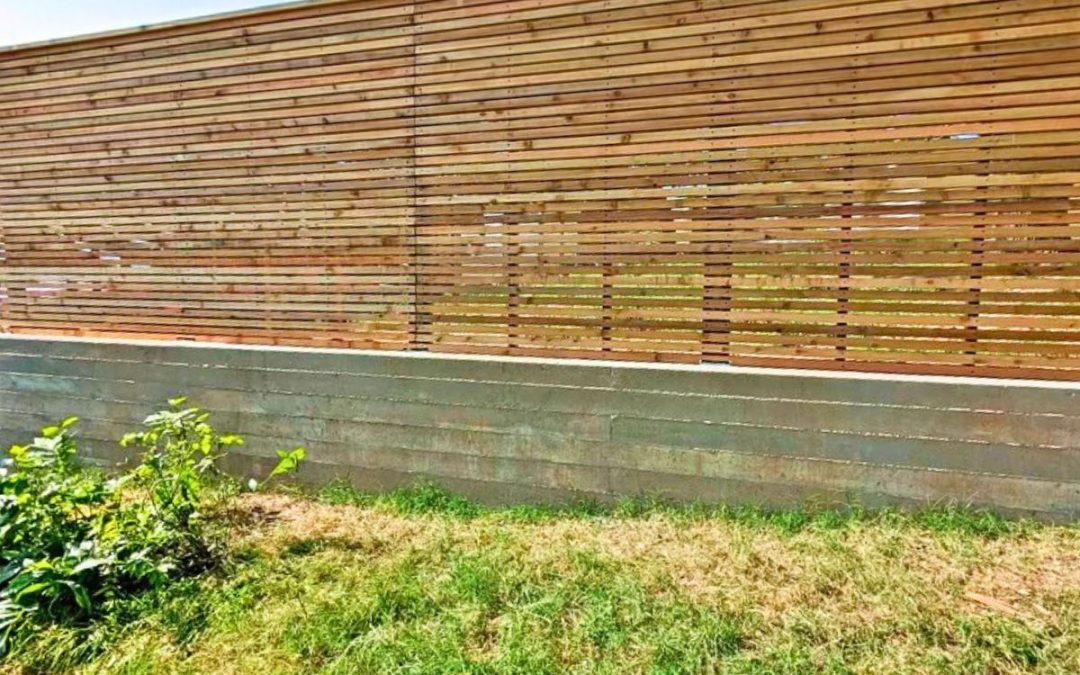
What our heat and drought do to a fence
Austin weather is tough on a fence in two ways. The sun is relentless in summer, and constant UV fades color, dries out wood, and can make some materials brittle over time. Then there’s the drought side, where long dry spells shrink and crack our clay soil, and that moving ground works on the posts.
So a fence here really faces two tests at once: the material has to survive the sun, and the structure has to survive the shifting ground. The best fence is one that answers both. Our Austin fence team builds with that combination in mind, since a fence that only handles one of the two won’t go the distance.
Cedar: the local favorite
Cedar earns its popularity in our climate. Its natural oils help it resist the drying, cracking, and warping that our sun causes, and they fight off rot and bugs during humid, wet spells. It handles the swing from bone-dry to soaked better than most woods, which is exactly the cycle Austin puts a fence through.
A stain every few years keeps cedar’s color rich and adds even more protection from the sun, stretching its life further. For a lot of homeowners it hits the sweet spot: natural good looks, real durability, and a material that’s built for Texas heat. You can see options on our cedar fence page.
Vinyl: low upkeep in the sun
Vinyl is a strong pick if you want a fence that shrugs off the heat with almost no upkeep. It won’t rot, it won’t warp like wood can, and quality vinyl is made to resist fading in the sun, so it keeps its clean look for years without staining or sealing. In our climate, that low-maintenance angle is a real draw.
It also doesn’t feed termites or soak up water, which takes two common Texas fence problems off the table. If the idea of never staining a fence again sounds good, vinyl is worth a serious look. Our vinyl fence page covers the styles and the low-maintenance benefits in more detail.
Metal and iron: built to take the sun
Metal fences, including ornamental iron and steel, handle heat and drought about as well as anything. The sun doesn’t warp or rot metal, and a good finish keeps rust at bay for a long time. Metal won’t give you full privacy on its own, but for security, pool areas, and a clean look, it’s tough to beat.
It’s also extremely low upkeep and very long-lasting, which suits our climate well. Some homeowners pair a metal fence with landscaping for privacy, getting the durability of metal and the greenery they want. For the right yard, it’s a fence that laughs at the Texas sun year after year.
Why posts matter as much as material
Here’s the part people miss: in drought country, the posts decide as much as the boards. When our clay dries out and shrinks, it pulls away from the posts and lets them shift. A gorgeous fence on shallow posts will still lean once a hard, dry summer works on the ground beneath it.
That’s why we set posts deep, below the layer that moves the most, so they hold steady through the dry-and-wet cycle. The material you pick sets the look and the upkeep. The posts set whether the fence stays straight. Both have to be right, and the posts are the half that gets overlooked.
Drainage and watering habits
Little things around the fence make a difference in drought, too. If you run sprinklers, keep them from blasting the fence line day after day, since constant water on wood speeds up rot and swells the soil right where the posts sit. Aim the spray at the lawn, not the fence.
Good drainage helps on both ends of the weather. It keeps water from pooling at the posts during a downpour, and steady, even moisture in the soil beats the extreme swing from soaked to bone-dry. Small habits like these help any fence, cedar, vinyl, or metal, ride out our climate in better shape.
Matching the fence to your yard
The best material also depends on what you want from the fence. Need a private back yard with a warm, natural look? Cedar is hard to beat. Want to never think about upkeep again? Vinyl. After security or a clean, open feel around a pool? Metal. There’s no single winner, just the right fit for your yard.
Budget, style, and how much maintenance you’re up for all factor in too. That’s the kind of thing we’re happy to talk through in person, matching the material to your home and your priorities. The goal is a fence you love that also stands up to everything an Austin summer throws at it.
Which fence is right for your part of town?
The best heat-and-drought fence can also depend on where you are in the metro and what your yard is like. A wide-open lot that takes full sun all day leans toward materials that shrug off UV, like vinyl or a well-stained cedar. A shadier yard has a little more freedom in what holds up well over time.
Soil matters as much as sun for the long haul. On the clay that covers much of the Austin metro, deep posts are the key to a fence that doesn’t lean once a dry summer shrinks the ground. On rockier western lots, the posts tend to stay put more easily, so the material choice can lead the decision.
So there’s no single right answer for the whole city. The best fence for a sun-blasted lot on shifting clay isn’t necessarily the best one for a shaded yard on rock. That’s exactly the kind of thing we look at in person, matching the material and the build to the real conditions on your property.
Keeping any fence going through the heat
Whatever you choose, a little attention goes a long way in our climate. Walk the fence now and then, especially after a long dry spell or a big storm, and look for lean, loose posts, and sun-worn boards. Our fence inspection guide shows what to watch for so nothing sneaks up on you.
Catch the small stuff early and almost any good fence will serve you well for years here. Heat and drought are hard on a fence, but they’re not unbeatable. The right material, deep posts, and a bit of upkeep add up to a fence that stays strong and looks good through Austin summer after Austin summer.
Quick Answers
What is the best fence for Austin heat?
Cedar, vinyl, and metal all do well. Cedar resists cracking and rot naturally, vinyl shrugs off sun with no upkeep, and metal barely notices the heat. The best one depends on your yard and your priorities.
Does drought really affect a fence?
Yes. Long dry spells shrink and crack our clay soil, and that moving ground loosens fence posts over time. That’s why deep, solid posts matter as much as the material in drought country.
Is vinyl good in the Texas sun?
Quality vinyl is made to resist fading and won’t warp or rot, so it holds its look for years with almost no upkeep. It’s a strong low-maintenance choice for our heat.
Why does my fence wobble in summer?
Usually because the clay dried out and shrank away from the posts, letting them shift. Posts set too shallow move most. Resetting them deeper is the fix.
Do sprinklers hurt my fence?
They can if they hit the fence line every day. Constant water speeds up rot in wood and swells the soil at the posts. Aim sprinklers at the lawn, not the fence.
Want a fence built for Austin heat and dry soil? We’ll match the material and set the posts right. We’re fully insured. Call (512) 566-7567 or get a free estimate.