
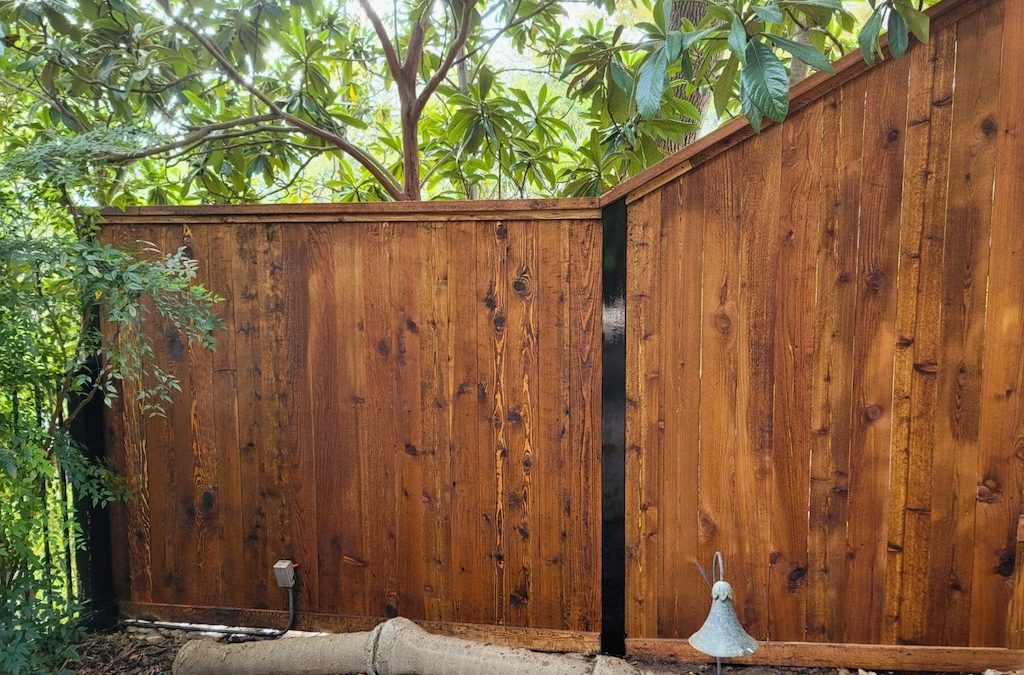
Yes, you can build a strong fence on Austin’s limestone and caliche. It just takes the right tools and know-how. This rocky ground is hard to dig, so the posts need special care to sit deep and hold tight. Done right, a fence on rock can stand very steady, since rock doesn’t swell and shift the way our clay does.
What limestone and caliche really are
Not all Austin dirt is the same. Some yards have deep, easy soil. Others sit on limestone rock or caliche, a hard, chalky layer, close to the surface. Caliche is a natural cement of sorts, where minerals have bound the soil into a tough crust. It can be a few inches down or right under the grass.
Our Austin fence team runs into this a lot, especially in west and northwest Austin and the Hill Country suburbs. If your shovel clangs a few inches down, or you’ve watched a landscaper struggle to plant a tree, there’s a good chance you’ve got rock or caliche under your yard. It changes how a fence gets built.
Why rocky ground is so hard to dig
A fence needs post holes, and post holes need digging. In soft soil that’s quick. In limestone or caliche, it’s a different job. A regular hand auger or shovel barely scratches it. The rock is too hard to push through, so the tools that work in clay just bounce off.
That’s why this kind of ground takes real equipment: heavy-duty augers, rock drills, and sometimes a jackhammer-style tool to break through. It’s slower, tougher work, and it’s a big reason a quote for a rocky yard can run higher than one for a soft, easy lot. The digging itself is the hard part.
The good news: rock holds a post well
Here’s the upside, and it’s a real one. Once a post is set solidly into rock, it tends to stay put. Rock doesn’t swell up when it’s wet and shrink when it’s dry, the way our Blackland clay does across much of the metro. That constant back-and-forth is what slowly pushes clay-set posts out of line.
So a fence built the right way on rock can be very steady for a very long time. The trade-off is simple: it’s harder to dig, but the reward is a post that isn’t fighting the soil every season. Get past the digging, and rocky ground is actually a solid place to plant a fence.
How we set posts in rock
Setting a post in rock is about depth and a snug fit. We drill or break the hole deep enough to give the post a real grip, then secure it so it can’t wiggle or work loose over time. A post that’s just wedged into a shallow chip of rock won’t last. Depth still matters here, even though the ground is hard.
We also make sure the hole is the right shape and packed properly around the post, so there are no gaps for water to sit in. Water pooling around a post is never good, rock or not. Done carefully, a post in caliche can be rock-solid, which is exactly what you want holding up your fence.
When the rock is close to the surface
Sometimes the rock sits so shallow that a standard post depth just isn’t possible in one spot. When that happens, we adjust. We may core deeper into the rock, or use a setting method built for shallow-rock conditions, so the post still ends up firm and straight. There’s almost always a way to make it work.
The wrong move is to give up and set the post too shallow just because the rock is stubborn. A shortcut there means a wobbly post down the line. We’d rather take the extra time to break through and do it right, so your fence stands the way it should from the first day.
Rock versus clay for your fence
Plenty of Austin yards are a mix, with rock in one stretch and clay in another. That’s fine, we just build for what each part of the yard actually has. On the clay runs, depth and drainage do the heavy lifting. On the rock runs, the challenge is the digging, not the holding.
If your whole yard is rock, you’ve traded a hard dig for a fence that’s less likely to lean over the years. If it’s clay, the posts have to be set deep to ride out the swelling and shrinking. Either way, the fix is the same idea: set the posts right for the ground they’re in, across the Austin area and its many soil types.
Signs a fence on rocky soil is working loose
Even a well-built fence deserves a look now and then. On rocky ground, a loose post usually means it was set too shallow to begin with, or water has been sitting at its base and wearing at the fit. If a post wobbles when you push it, that’s your cue to have it checked before it drags a section down.
A quick seasonal walk of the fence catches these things early. Our fence inspection guide shows what to look for, from loose posts to gaps and lean. If something has come loose, a fence repair to reset that post is usually all it takes, and it’s far cheaper than waiting until the whole run is in trouble.
What to expect on install day
If your yard’s got rock or caliche, it helps to know the dig will simply take longer than it would in soft soil. That’s normal, and it’s not a sign anything’s wrong. A good crew comes prepared with the right tools and builds the extra time into the plan, so you’re not caught off guard when the post holes take a while to break through.
It’s also worth clearing the fence line ahead of time so the crew has room to work the heavier equipment. Move planters, hoses, and anything loose out of the way. The smoother the access, the smoother the dig, and the faster your fence goes from a line of tough post holes to a finished run standing straight and solid.
Getting it done right on tough ground
Rocky soil isn’t a reason to settle for a weak fence. It just means the crew needs the right tools and the patience to use them. A company that mostly works easy lots may under-quote the dig, then rush it. One that builds on Austin rock all the time plans for it and prices it honestly.
If your fence on rock has already come loose, it’s worth knowing whether a reset will hold or whether it’s time for a fuller fix. Our repair or replace guide walks through that call. And if you’re starting fresh, we’re glad to look at your ground and tell you exactly what it’ll take to build a fence that stands steady on it.
Quick Answers
Can you build a fence on limestone or caliche?
Yes. It takes heavier tools like rock drills to get through the hard ground, but a fence built on rock can be very steady, since rock doesn’t swell and shift the way clay does.
Why is my Austin yard so hard to dig?
You likely have limestone or caliche close to the surface, which is common in west and northwest Austin. It’s a hard, chalky layer that regular shovels and augers can’t push through.
Does a fence last longer on rock than clay?
Often, yes. Rock doesn’t swell and shrink with the seasons like clay, so a post set solidly in rock is less likely to lean over the years. The catch is that rock is harder to dig.
Why did my fence on rocky soil come loose?
Usually the post was set too shallow because the rock was hard to break through, or water sat at its base. Resetting that post deeper and snug normally fixes it.
Will a rocky yard cost more to fence?
It can, because the digging is slower and needs special tools. A crew that works Austin rock often will price that in honestly rather than under-quote and rush the holes.
Got rocky or caliche ground? We’ve got the tools and the know-how to build a fence that holds. We’re fully insured. Call (512) 566-7567 or get a free estimate.