
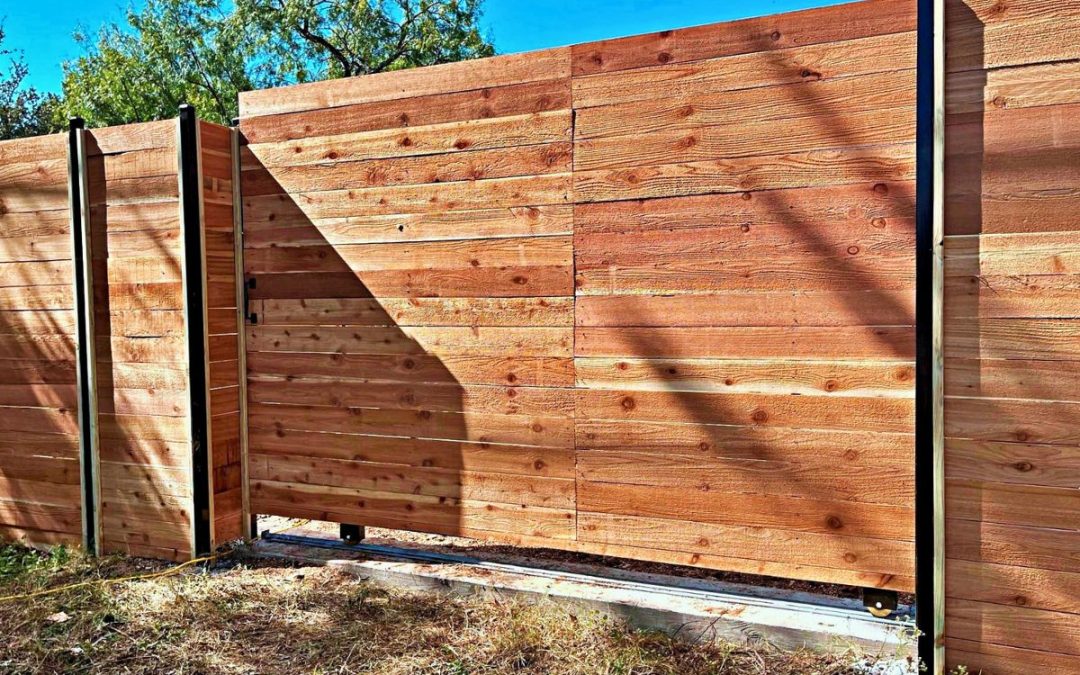
The real lifespan of a cedar fence here
Cedar is one of the best wood choices for an Austin fence, and its lifespan shows why. With normal care, you can expect roughly 15 to 20 years out of a cedar fence in our climate. Take good care of it, and it can push past 20. That’s a long run for a wood fence in Texas heat.
Compare that to a basic pine fence, which often lasts closer to 8 to 12 years, and cedar’s value gets clear. It costs more up front, but lasting nearly twice as long can make it the cheaper fence over time. Our Austin fence company builds a lot of cedar for exactly that reason.
Why cedar holds up so well
Cedar comes with built-in advantages. It has natural oils in the grain that bugs don’t like and that help it resist rot, which is a big deal in a place with termites and humid, wet spells. Those same oils make it more stable, so it’s less likely to warp, cup, or split as the weather swings.
That stability really matters in Austin, where a fence bakes in summer, then soaks in a downpour, over and over. Woods that move a lot with those swings wear out faster. Cedar takes the cycle in stride better than most, which is a large part of why it lasts as long as it does around here.
What shortens a cedar fence early
A cedar fence can still fail early if a few things go wrong. Poor installation is the big one. Posts set too shallow lean and loosen in our shifting clay, and once the structure goes, the fence’s days are numbered no matter how good the wood is. The build matters as much as the material.
Skipping upkeep hurts too. Bare cedar left to the sun and rain for years will gray, dry out, and weather faster than cedar that’s been stained. Constant moisture is another killer, from sprinklers hitting the wood daily to soil piled against the base. Fix those, and you’ve removed most of what cuts a cedar fence short.
How staining extends the life
If there’s one easy thing that adds years to a cedar fence, it’s staining. A good stain seals the wood, keeps water from soaking into the grain, and blocks a lot of the sun damage that fades and dries out bare boards. It’s the single best habit for a longer-lasting fence.
You don’t need to do it constantly. A fresh coat every few years is plenty for most cedar fences here. It’s a modest bit of upkeep that pays off in real added lifespan, and it keeps the fence looking rich and cared-for instead of gray and tired. Well worth the weekend it takes.
How your soil plays a part
The ground under your fence affects how long it stands, too. Much of Austin sits on Blackland clay that swells when wet and shrinks when dry, and that movement works on the posts year after year. Posts set deep enough to ride out that motion keep the fence straight far longer than shallow ones.
On rockier ground, the posts tend to stay put more easily, since rock doesn’t shift the way clay does. Either way, the wood can only last as long as the structure holding it up. A great cedar fence on weak posts still fails early, which is why we set posts for the soil they’re actually in.
Signs your cedar fence is aging
Cedar gives you clear signals as it ages. Watch for boards that are cracking, splitting, or turning soft, posts that lean or wobble, and rails pulling loose from their fasteners. A little graying is just cosmetic, but soft, crumbling wood means rot has set in and that spot is failing.
A quick walk of the fence each season catches these early. Our fence inspection guide lays out exactly what to look for. Catching a loose post or a rotting rail while it’s small is the difference between a quick fix and a much bigger repair down the road, and it can add years to the fence.
Repair or replace an old cedar fence?
When a cedar fence shows its age, you don’t always have to replace the whole thing. If the posts are still solid and only a few boards or a rail have gone bad, a repair can bring it back and buy you more good years. Cedar is worth repairing when the bones are still strong.
If the posts are leaning across the whole run and the wood is soft in many spots, a full rebuild is usually the smarter spend than chasing repair after repair. Our repair or replace guide helps you make that call. We’ll give you an honest read on whether your cedar fence has more life in it.
Does where you live in Austin matter?
Where your home sits in the metro can nudge how a cedar fence ages. Yards on heavy clay put more strain on the posts as the soil swells and shrinks, so the build has to account for it. Yards on rockier ground tend to hold posts more easily. The wood is the same either way, but the ground it stands in isn’t.
Sun exposure plays a part too. A fence line that bakes in full afternoon sun weathers faster than one that gets some shade, so it may want staining a little sooner. None of this changes cedar’s basic strength, it just means a fence built for yards across Austin gets set up for the exact spot it lives in.
That’s why a good install looks at your particular yard, not just a generic checklist. Set the posts right for your soil, plan for your sun, and stain on a schedule that fits your exposure, and your cedar fence gets every year it’s capable of. The lifespan number is real, but how you hit the top of it is local.
Getting the most years from cedar
Put it all together and a long cedar fence life isn’t complicated. Start with a solid build and posts set right for your soil. Stain it every few years. Keep sprinklers and piled-up soil off the wood. Walk it now and then and fix the small stuff early. Do those, and 20 years is well within reach.
See styles and finishes on our cedar fence page, and when you’re ready, we’re glad to build you one that’s set up to last from day one. A cedar fence done right is one of the best long-term values in fencing for an Austin yard.
Quick Answers
How long does a cedar fence last in Austin?
Usually about 15 to 20 years, and longer with good care. Cedar’s natural oils help it resist rot and bugs and stay stable through our heat, which is why it lasts well here.
Does staining a cedar fence help it last?
Yes, a lot. A stain every few years seals the wood, keeps water out of the grain, and blocks sun damage. It’s the single best habit for adding years to a cedar fence.
What makes a cedar fence fail early?
Mostly poor installation, like shallow posts that lean in our clay, plus skipped upkeep and constant moisture from sprinklers or soil piled against the base. The build matters as much as the wood.
Can an old cedar fence be repaired?
Often yes. If the posts are still solid and only a few boards or rails have gone bad, a repair can add good years. If posts lean across the whole run, a rebuild is usually smarter.
Is cedar worth the extra cost?
For most Austin yards, yes. It costs more than pine up front but can last nearly twice as long with care, which often makes it the cheaper fence over its full life.
Want a cedar fence built to go the distance? We’ll set it up to last. We’re fully insured. Call (512) 566-7567 or get a free estimate.