
Step 1: Know what you want the fence to do
Every good fence project starts with a clear goal, because the goal shapes every choice after it. Are you after privacy, keeping a dog safely in the yard, security, curb appeal, or some mix of those? A privacy fence and a decorative front-yard fence are very different builds, so it helps to know your main reason up front.
Write down your top priorities before anything else. If it’s a private back yard for the family, that points one way. If it’s a low, good-looking fence out front, that points another. Getting clear here makes every later decision, from material to height, much simpler and keeps the project pointed at what you actually care about.
Step 2: Set a rough budget
Next, get a rough sense of what you want to spend. You don’t need an exact figure yet, just a range you’re comfortable with. That range helps steer your material choice and keeps the whole plan realistic, so you’re not falling in love with options that don’t fit.
Keep in mind that the cheapest build isn’t always the best value. A fence that lasts far longer can be the smarter spend even at a higher starting number. It helps to think about the cost over the life of the fence, not just the price on day one. A little wiggle room in the budget is wise, too.
Step 3: Pick your material
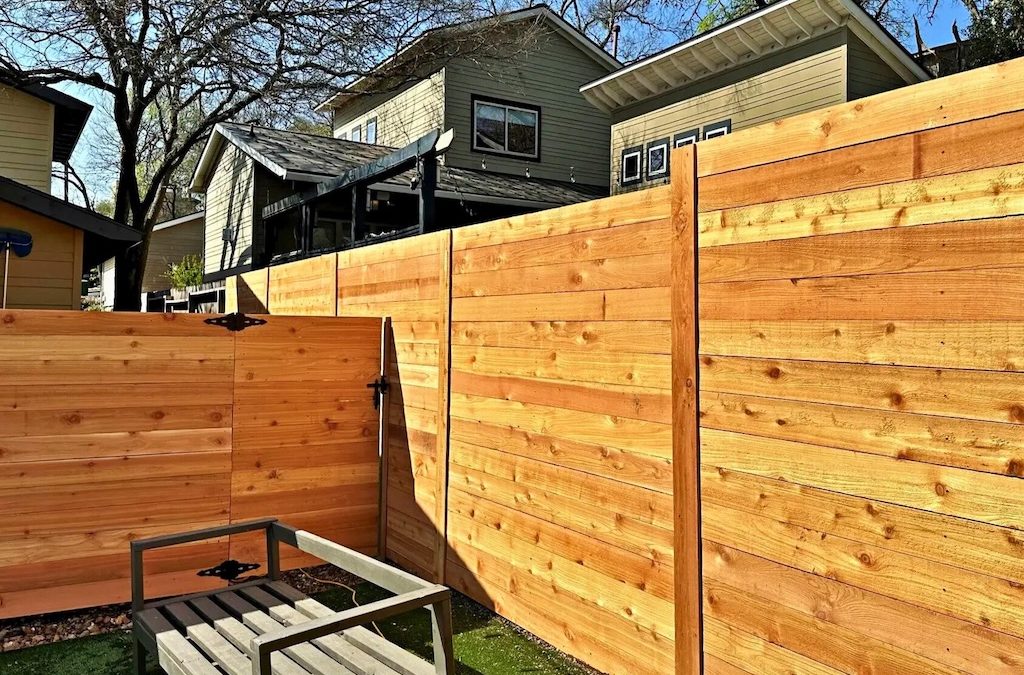
Now the fun part: choosing what the fence is made of. Cedar gives a warm, natural look and handles our heat and bugs well. Vinyl is low-maintenance and shrugs off the sun. Metal and iron are tough and great for security. Chain link is a budget-friendly way to contain a yard. Each has its own look, lifespan, and upkeep.
Match the material to your goal and your budget from the first two steps. Want privacy with a natural feel? Cedar or a wood privacy fence. Want to never stain a fence again? Vinyl. There’s no single best material, just the right one for your yard and your priorities, and we’re glad to help you weigh them.
Step 4: Check your property line
Before anything gets built, make sure you know where your property line falls. A fence has to sit on your own land, and building even a few inches onto a neighbor’s yard can force an expensive do-over later. If you’re not sure where the boundary is, this is the moment to find out, not after the posts are set.
If you already have a survey, dig it out. If you don’t, and there’s any real doubt, a survey is cheap certainty compared to moving a finished fence. Getting the line right up front also keeps the peace with your neighbors, which is worth a lot when you share a boundary with them for years.
Step 5: Handle permits and HOA rules
Many fences need a permit, and many neighborhoods have an HOA with its own rules on height, material, and color. This is the step people most often forget, and skipping it can mean fines or being told to change the fence later. Check both the city and your HOA before you build, not after.
The good news is you don’t have to navigate it alone. We work with permit partners who handle the paperwork, and our guides to the Austin fence permit process and HOA fence rules cover what to expect. Line these up early so approvals run alongside your planning instead of holding everything up at the end.
Step 6: Plan gates and the layout
Think through the practical details before the crew arrives. Where do you want gates, how wide should they be, and which way should they swing? A wide gate for the mower or the trash bins, a walk gate by the side yard, the flow of how you actually use the yard. These are easy to plan now and annoying to change later.
Sketch the fence line, too, noting corners, slopes, and anything in the way like trees, AC units, or sprinkler lines. The more the crew knows up front, the smoother the build. Good planning here means the finished fence fits how you live, not just how the yard looks on paper.
Step 7: Hire a good fence company
This step protects everything you’ve planned. Look for a company that’s established and fully insured, gives clear itemized quotes, and stands behind its work with a warranty. Ask what’s included, how they set posts, and how they handle our clay and rock. A careful, upfront company is worth more than the lowest bid.
Get your quotes in writing and compare what each one actually covers, not just the totals. A good crew will happily answer your questions and explain their number. Our Austin fence team gives straight, itemized quotes so you know exactly what you’re paying for before anything begins.
Common planning mistakes to avoid
A few planning slip-ups come up again and again, and they’re easy to dodge once you know them. The biggest is skipping the property-line check and the permit step, then finding out the hard way after the fence is up. Sort those before you build, not after, and you’ve avoided the two most expensive mistakes people make.
Another is chasing the lowest quote without checking what’s in it, which often means paying again later for a fence that wasn’t built to last. Rushing the material choice is a third, since the wrong material for your goal leads to regret every time you look at the fence. Slow down on these few decisions and the rest falls into place.
Finally, don’t forget the practical details, like where gates go and how you actually move through the yard. It’s easy to focus on the look and overlook the daily use, then wish the gate were wider or on the other side. A little thought here means a fence that works for your life, not just one that looks good in the yard.
Step 8: Confirm the plan and build
With everything decided, confirm the details with your company before work starts: the material, the layout, the gate spots, the line, and the timeline. A quick review now catches any last misunderstanding while it’s still easy to fix, and it makes install day go smoothly for everyone.
Then the fun part happens and your fence goes up. Because you planned it step by step, there are no scrambles and no surprises, just a fence that does what you set out to do. When you’re ready to start, we’ll walk your yard across Austin and help you turn the plan into a fence that lasts.
Quick Answers
How do I start planning a fence?
Start with your goal, whether it’s privacy, security, a dog, or curb appeal, since that shapes every other choice. Then set a rough budget and pick a material that fits both.
What should I decide before getting quotes?
Know your goal, a budget range, a preferred material, roughly where the fence goes, and where you want gates. The clearer you are, the more accurate and comparable your quotes will be.
Do I need a permit and HOA approval?
Often both. Many fences need a city permit, and many neighborhoods have HOA rules on height, material, and color. Check both before you build. We handle the permit through our partners.
How do I pick a good fence company?
Look for one that’s established and fully insured, gives clear itemized quotes, and offers a workmanship warranty. Ask what’s included and how they set posts. The lowest bid isn’t always the best value.
How do I make sure my fence stays on my land?
Check your property line before building. Use an existing survey if you have one, or get a new one if there’s any doubt. Building onto a neighbor’s land can force a costly do-over.
Ready to turn your plan into a fence? We’ll guide you from first step to final board. We’re fully insured. Call (512) 566-7567 or get a free estimate.